Cryo-CMOS control and readout of solid-state qubits
Technology Introduction:
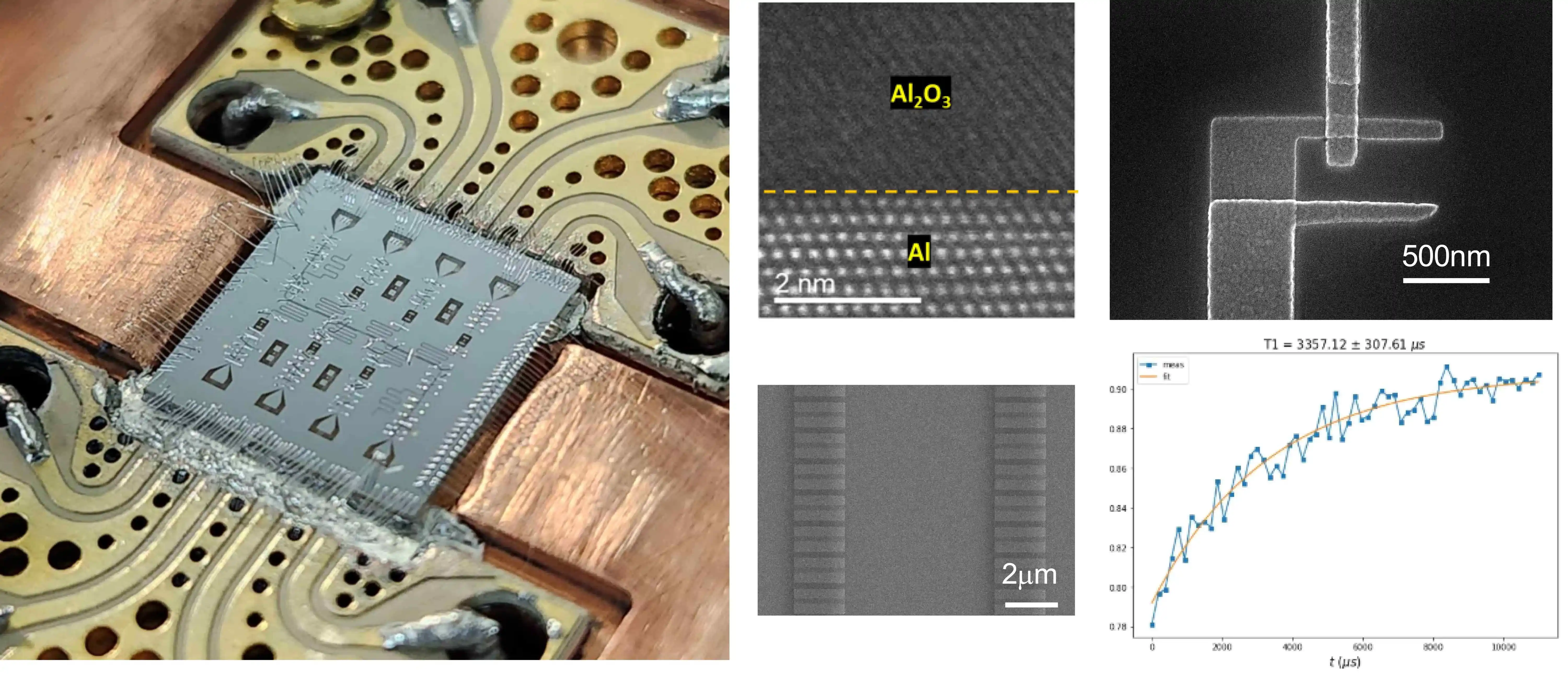
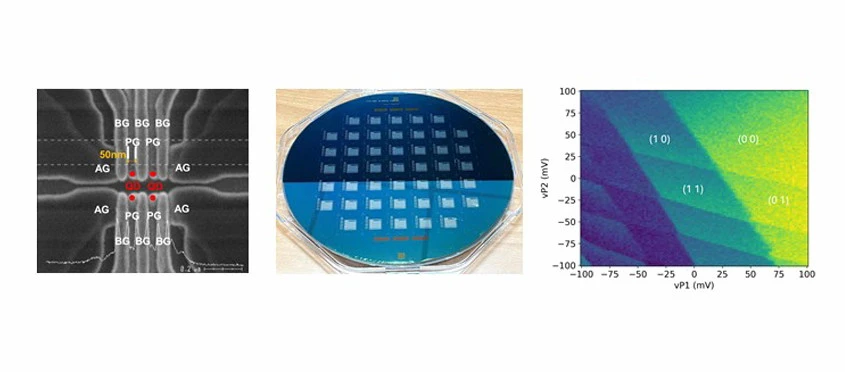
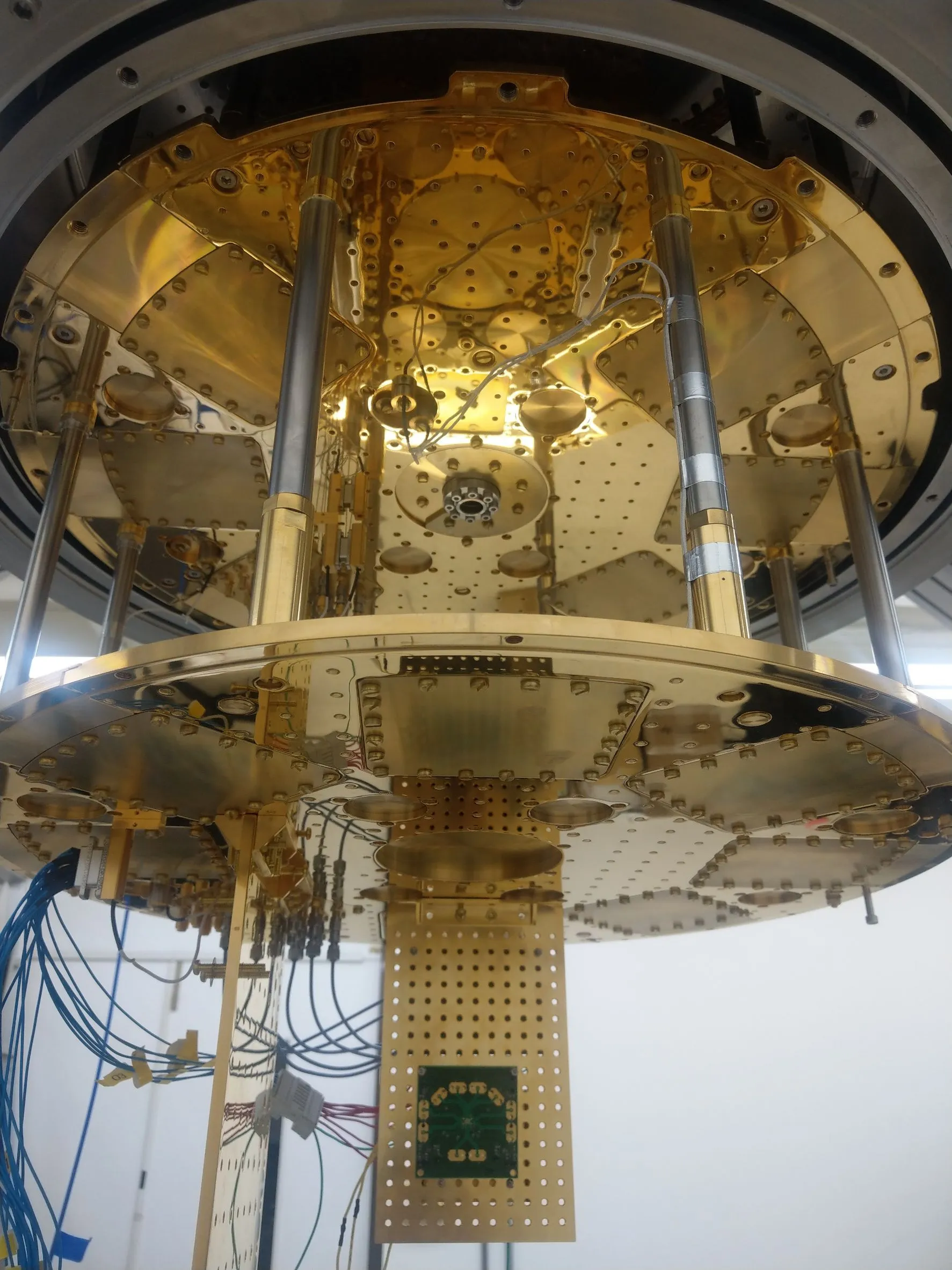
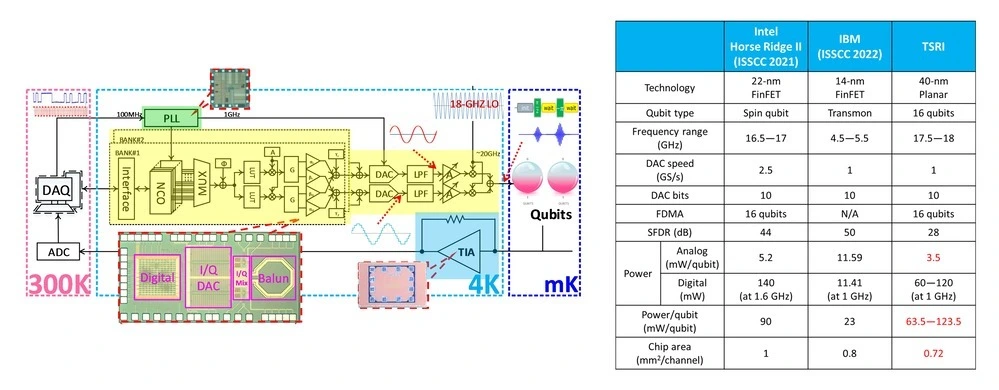
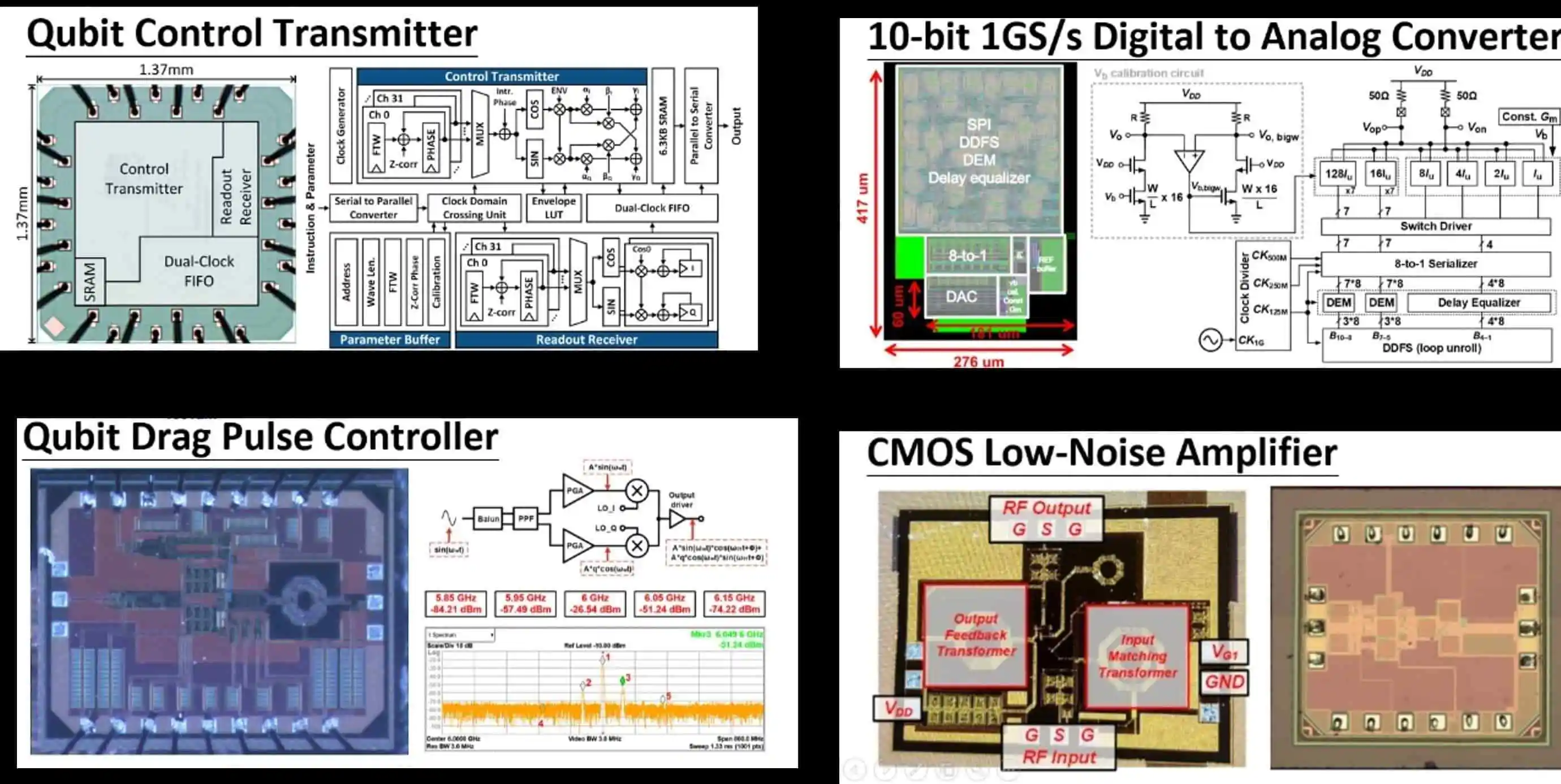
Technology Introduction:A practical quantum computer requires more than millions quantum bits (qubits) to execute error corrections, which is difficult to achieve using conventional electronic instrument to control and read out the qubits due to the signal latency, heat load, cost, and noise by the long wire distance between the room-temperature electronics and qubit processors at cryogenic temperatures. Thus, a cryo-CMOS system-on-chip (SOC) technology is proposed to replace the room-temperature electronic instrument for large-scale qubit applications. We design circuits of digital-signal generation, digital-to-analog conversion, mixers, local oscillators, radio-frequency (RF) driver/amplifiers, and low-noise amplifiers based on CMOS technology for qubit control-readout and control at cryogenic temperatures (~ -269.15 ℃) and tape out using the foundry service. The target is to demonstrate the qubit control and readout using those cryo-CMOS circuits.
Industry Applicability:
Taiwan has strong industry for integrated-circuit fabrication and design. However, local companies lack experience on fabrication of qubits and the peripheral circuits for quantum computing. Our projects aim to developed knowledge for cryo-CMOS technologies, which is crucial to enable large-scale quantum computers. On the other hand, cryo-CMOS circuits also show great potential for space electronics application since the temperature in outer space can be as low as ~ 4 K. A communication transceiver can be realized by merging the circuit modules we’ve developed, which is key component for low-earth orbit (LEO) satellites. Industry does not have detailed information and experience using the modern CMOS technology and our pioneering work paves a way for both promising technologies of quantum computing and global communication.
Industrial Applications:
-
National Taiwan University
At present, the University consists of 16 colleges, 58 departments, 146 graduate institutes, as well as 34 Master's and PhD degree programs. NTU's programs cover a wide array of disciplines across science, arts, and the humanities, with up to 8,000 courses made available for selection each semester.
Contact Information
Name:-
Tel:02-3366-3700 #219
Address:No. 1, Sec. 4, Roosevelt Rd., Taipei 10617, Taiwan (R.O.C.)
Additional Information
Pavilion:Future Tech Quantum Technology FI07
Exhibiting Entity:National Science and Technology Council
Application Category:Electronics and Optoelectronics
More
Pavilion:Future Tech Quantum Technology FI07
Exhibiting Entity:National Science and Technology Council
Application Category:Electronics and Optoelectronics