Utilization of Image Recognition Techniques for the Detection of Physiological Fatigue

Technology Introduction:
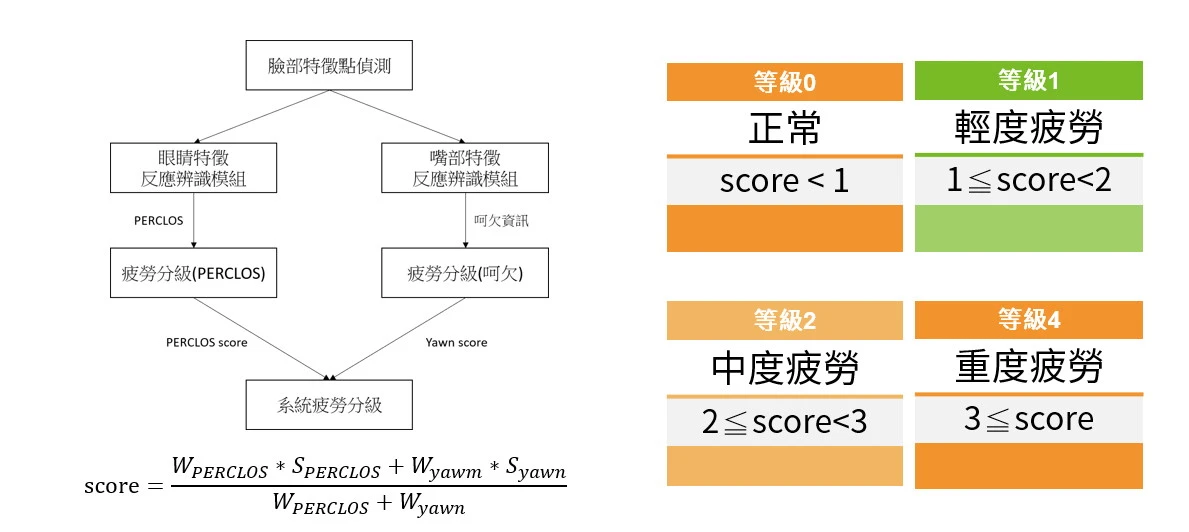
Technology Overview:In light of the increasing prevalence of image recognition and analysis technologies, this institute has applied such techniques to workplace fatigue detection. Recognition modules targeting facial, ocular, and oral features have been developed, and machine learning methods are employed to classify the monitored fatigue indicators into graded levels. The system provides real-time feedback on workers’ fatigue status to both employees and managers. The application scope particularly encompasses job tasks associated with immediate hazards or occupations prone to operational fatigue, delivering instant monitoring results and fatigue alerts to reduce occupational risks and hazards.
Industrial Applications:
This technology leverages image recognition and machine learning to monitor workers’ facial and ocular features in real time, identify physiological fatigue states, and classify them into graded levels. It has broad potential applications in high-risk industries such as transportation, construction, and manufacturing, where workers are required to work long hours with sustained concentration, making them prone to fatigue-related occupational accidents. The system can issue real-time fatigue alerts, supporting workers’ self-awareness while reminding management to implement protective measures, thereby helping to reduce occupational accident risks. In addition, this technology can serve as an auxiliary tool for occupational health management, demonstrating both industrial scalability and practical applicability.
Industrial Applications:
-
Institute of Labor, Occupational Safety and Health, Ministry of Labor
The Institute of Occupational Safety and Health, combining its expertise in occupational safety and health, plans integrated research topics including workplace safety and disaster prevention and intelligent monitoring technology research, occupational health hazard investigation and prevention and control, and workplace hazard factor exposure assessment and occupational injury and disease prevention research.