Next-Generation Ferroelectric Memory: System-Level Optimization and BEOL Film Development
Technology Introduction:
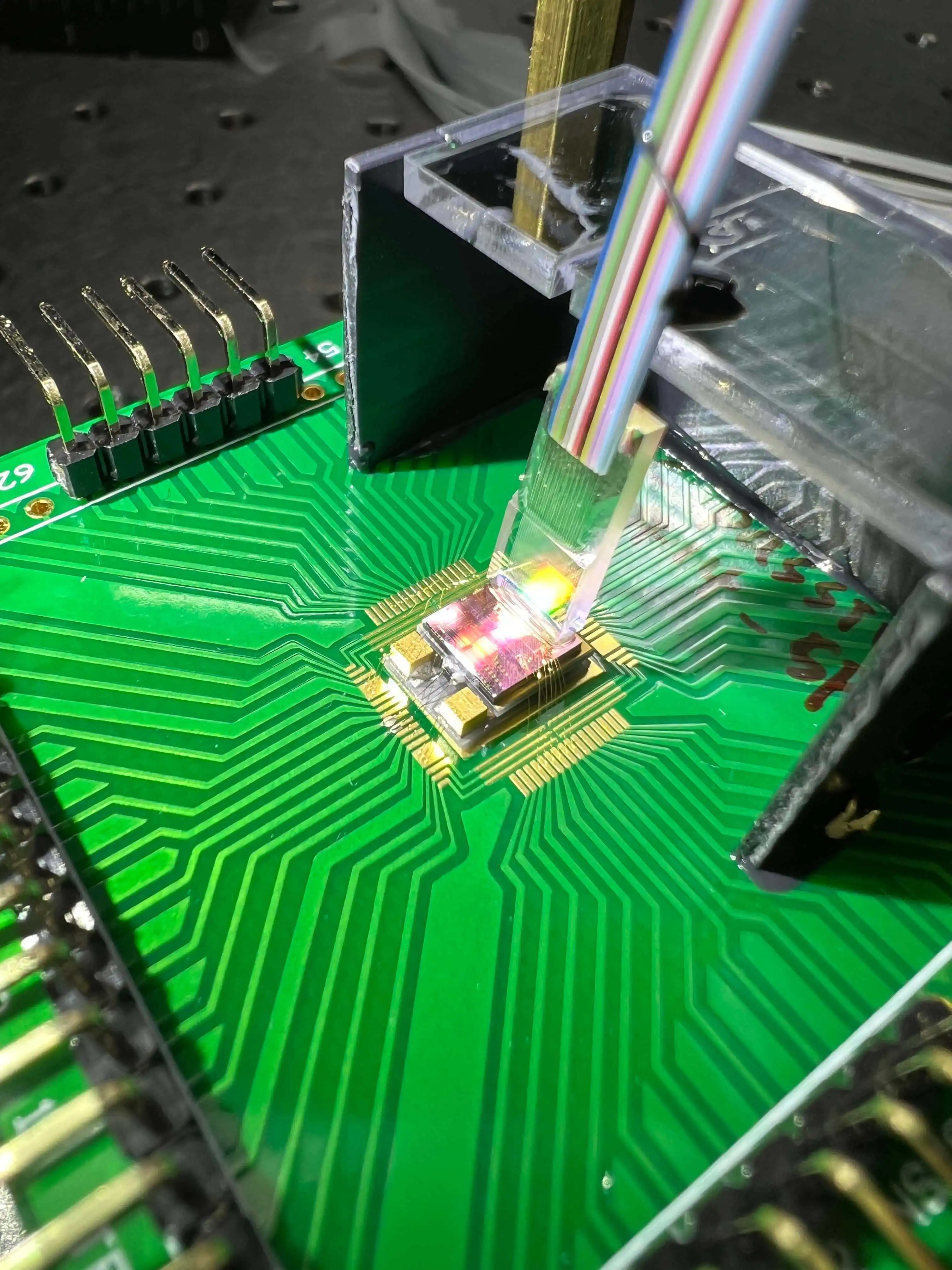
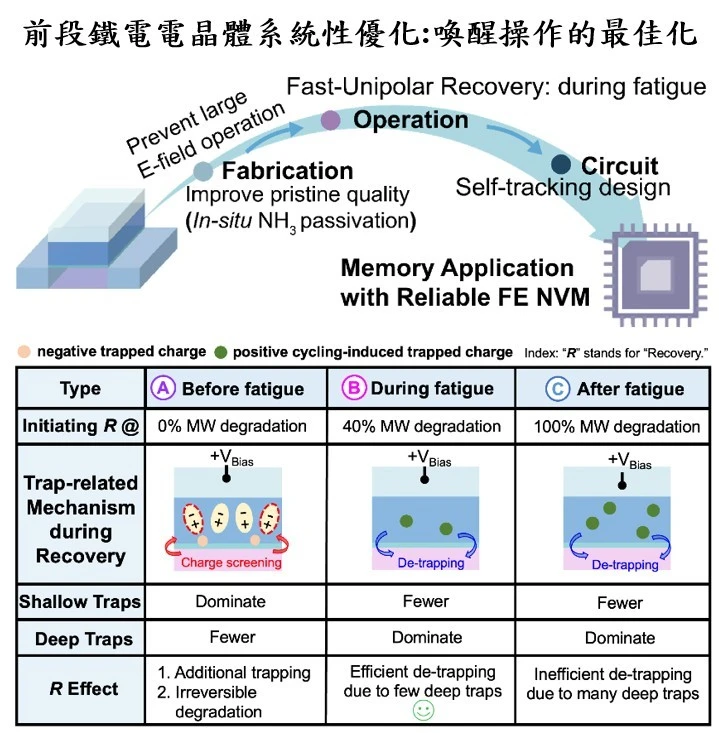
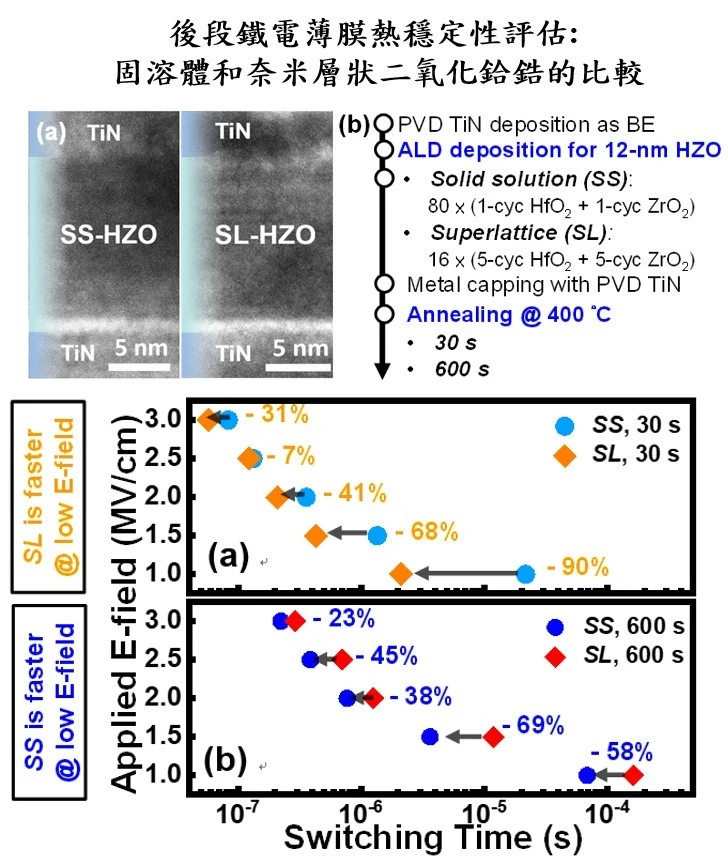
This technology focuses on enhancing ferroelectric memory by improving device interfaces, optimizing operation timing, and incorporating self-tracking circuits. These strategies extend device endurance and reduce performance loss. At the same time, various thin film structures compatible with back-end processes are developed to improve thermal stability, enabling faster and more reliable write operations. Together, these advancements address both manufacturing challenges and future application needs.
產業應用性:
本技術可望成為未來低功耗、高可靠度記憶體的核心方案,適用於 Edge-AI 等新興應用。透過前後段製程整合與材料創新,技術具備量產潛力並能加速先進半導體的應用落地。
Industry Applicability:
This technology addresses the growing demand for low-power, high-reliability non-volatile memory, making it particularly valuable for emerging Edge-AI applications. By integrating solutions for both front-end and back-end processes and introducing innovative materials, the approach demonstrates strong scalability and mass-production potential. It offers a practical pathway to accelerate the deployment of next-generation semiconductor applications across logic, memory, and heterogeneous integration.
This technology focuses on enhancing ferroelectric memory by improving device interfaces, optimizing operation timing, and incorporating self-tracking circuits. These strategies extend device endurance and reduce performance loss. At the same time, various thin film structures compatible with back-end processes are developed to improve thermal stability, enabling faster and more reliable write operations. Together, these advancements address both manufacturing challenges and future application needs.
產業應用性:
本技術可望成為未來低功耗、高可靠度記憶體的核心方案,適用於 Edge-AI 等新興應用。透過前後段製程整合與材料創新,技術具備量產潛力並能加速先進半導體的應用落地。
Industry Applicability:
This technology addresses the growing demand for low-power, high-reliability non-volatile memory, making it particularly valuable for emerging Edge-AI applications. By integrating solutions for both front-end and back-end processes and introducing innovative materials, the approach demonstrates strong scalability and mass-production potential. It offers a practical pathway to accelerate the deployment of next-generation semiconductor applications across logic, memory, and heterogeneous integration.
Industrial Applications:
-
National Taiwan University
At present, the University consists of 16 colleges, 58 departments, 146 graduate institutes, as well as 34 Master's and PhD degree programs. NTU's programs cover a wide array of disciplines across science, arts, and the humanities, with up to 8,000 courses made available for selection each semester.
Contact Information
Name:-
Tel:02-3366-5413
Address:No. 1, Sec. 4, Roosevelt Rd., Taipei 10617, Taiwan (R.O.C.)
Additional Information
Pavilion:Future Tech AI Applications and Industry-Academia Co-op FJ16
Exhibiting Entity:National Science and Technology Council
Application Category:Life Application
More
Pavilion:Future Tech AI Applications and Industry-Academia Co-op FJ16
Exhibiting Entity:National Science and Technology Council
Application Category:Life Application