Select Field
Select Ministry
24 results
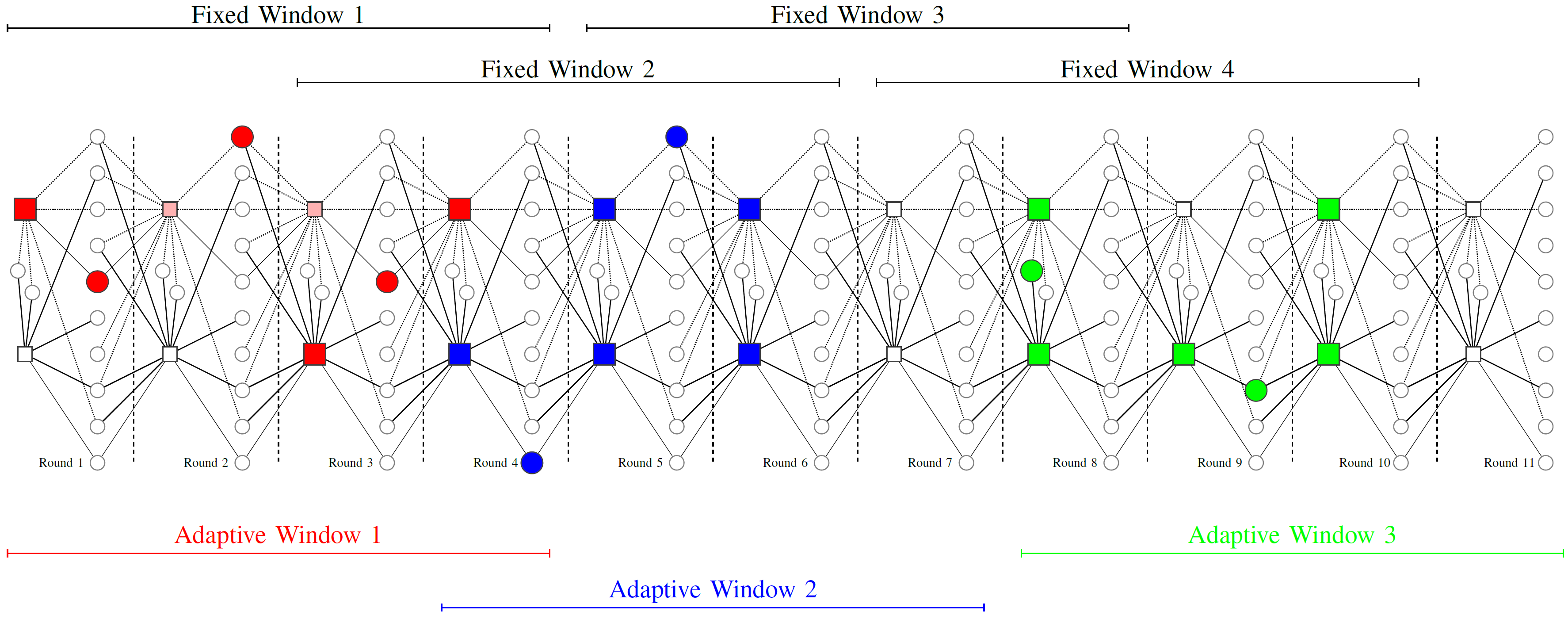
Technology Introduction: We developed advanced decoding techniques for universal quantum codes. Our optimized Belief Propagation algorithm integrates multi-round data to boost error correction accuracy and performance, paving the way for practical fault-tolerant quantum computing. Industry Applicability: This technology integrates high-performance decoders into quantum systems for real-time error correction, bridging theory and practical use.
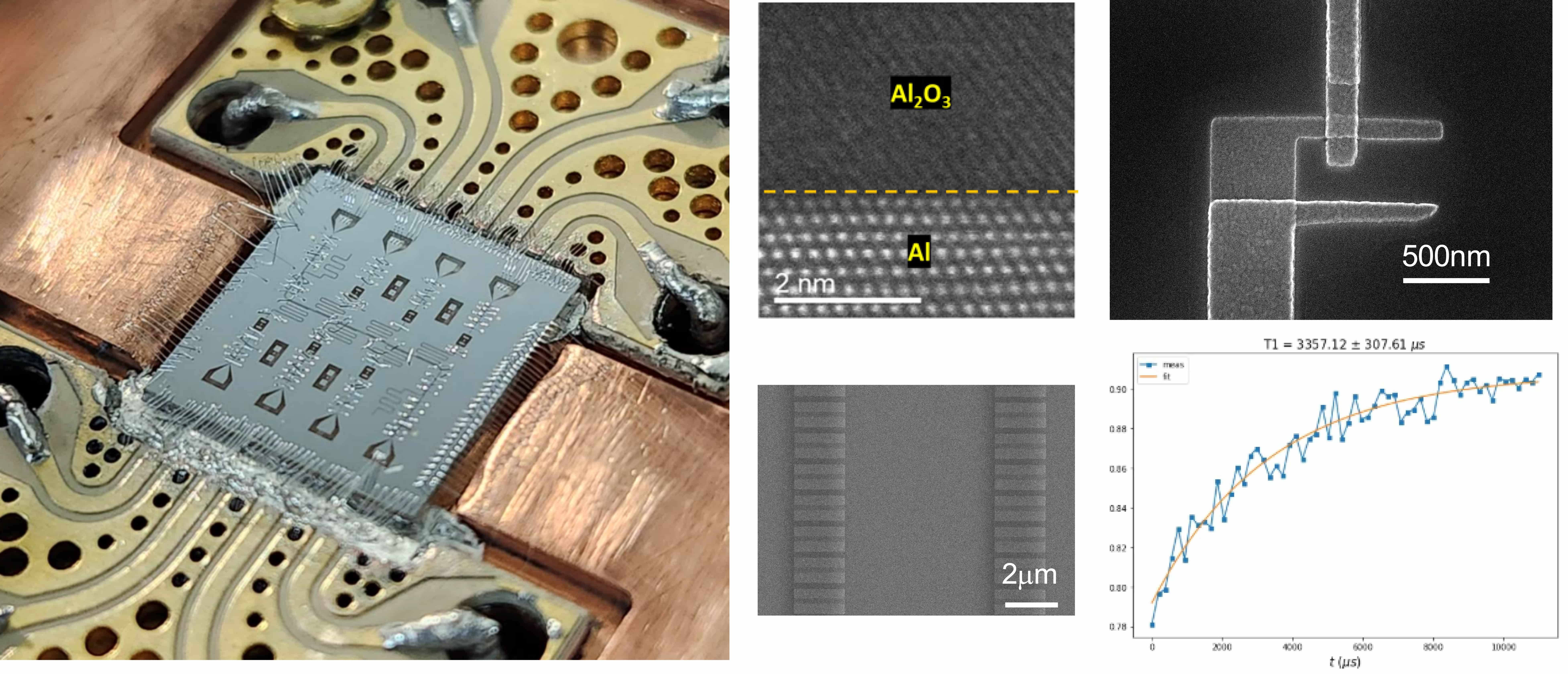
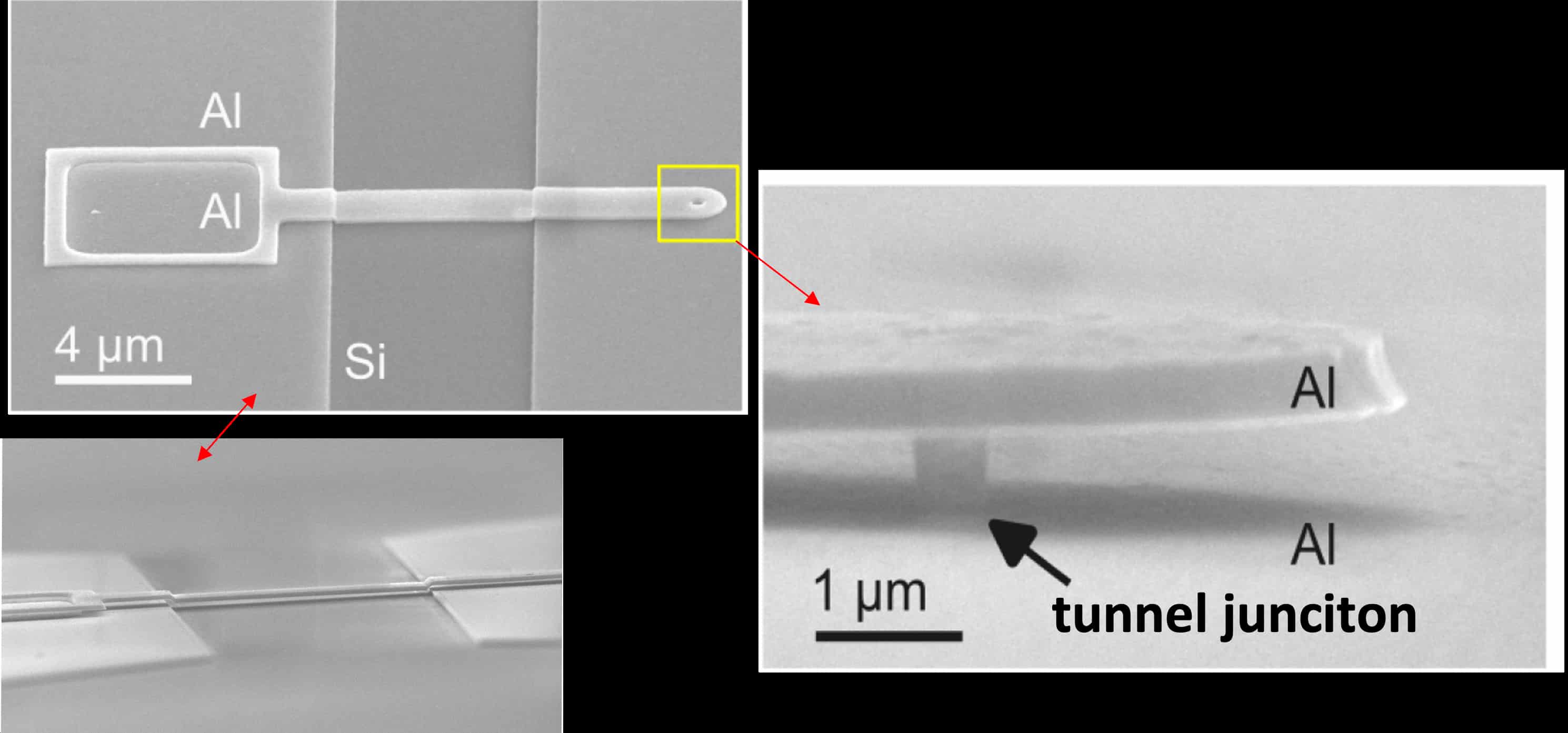
Future Tech | Electronics & OptoelectronicsTechnology Introduction: In an ultra-high vacuum environment, superconducting thin films are first grown, immediately followed by in situ high-quality encapsulation layers growth. Using photolithography and electron-beam lithography, we fabricate novel Fluxonium superconducting qubits, achieving energy relaxation times (T1) up to 3 ms, approaching the world record. Industry Applicability: The high-quality superconducting thin films produced by this technology can fabricate highly coherent qubit chips, advancing the quantum information industry, while also offering potential applications in microwave device fabrication and wireless communication networks.
Future Tech | Electronics & OptoelectronicsTechnology Introduction: We recently announced major progress in quantum chip fabrication, including the successful production of superconducting qubits on eight-inch wafers, and the launch of Taiwan’s first Quantum Chip Fabrication Space (QC-Fab) and Quantum Computing Test Space (QC-Test). These two facilities are open to academic and industrial communities worldwide.
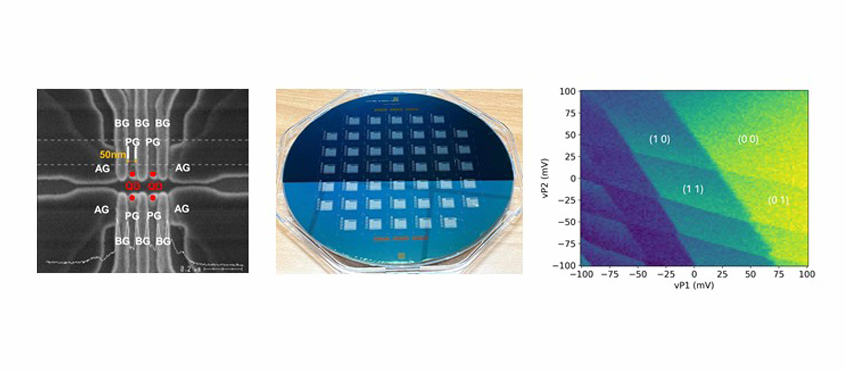
Future Tech | Electronics & OptoelectronicsTechnology Introduction: This project, "CMOS-compatible Quantum Processor with silicon-based Spin Qubits and Cryo-CMOS Integrated System," aims to advance quantum technology by leveraging manufacturing and design technologies established within Taiwan's semiconductor industry. The project focuses on CMOS-compatible spin qubits as its core technology and seeks to develop the peripheral cryogenic CMOS system as an integrated system. Spin qubits offer long coherence times and seamless compatibility with Taiwan’s semiconductor and electronic industries. The key goals include integrating these qubits with cryogenic CMOS circuits in an integrated design. Our team will utilize isotope-purified silicon (28Si) to enhance performance and optimize FinFET and Ge/SiGe heterostructures for qubit fabrication at the Taiwan Semiconductor Research Institute (TSRI). Another central part of this work involves developing low-noise, low-power cryo-CMOS circuits for both qubit control and readout. Additionally, we aim to integrate the qubits with the cryo-CMOS circuits using advanced semiconductor packaging techniques. Ultimately, this project seeks to build a vertical integrated ecosystem for a full-stack quantum processor in research, manufacturing, and characterization.
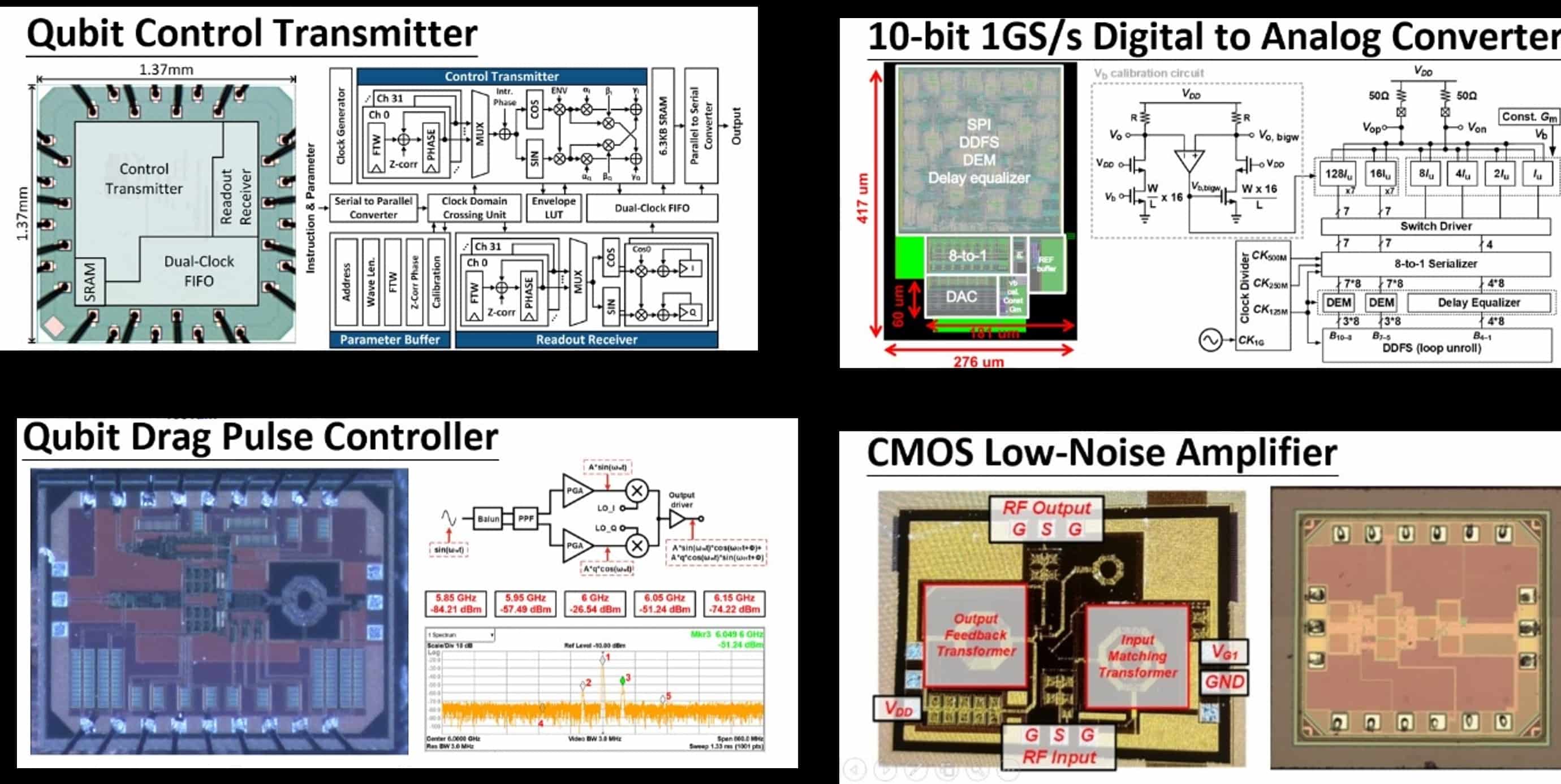
Future Tech | Electronics & OptoelectronicsTechnology Introduction: A practical quantum computer requires more than millions quantum bits (qubits) to execute error corrections, which is difficult to achieve using conventional electronic instrument to control and read out the qubits due to the signal latency, heat load, cost, and noise by the long wire distance between the room-temperature electronics and qubit processors at cryogenic temperatures. Thus, a cryo-CMOS system-on-chip (SOC) technology is proposed to replace the room-temperature electronic instrument for large-scale qubit applications. We design circuits of digital-signal generation, digital-to-analog conversion, mixers, local oscillators, radio-frequency (RF) driver/amplifiers, and low-noise amplifiers based on CMOS technology for qubit control-readout and control at cryogenic temperatures (~ -269.15 ℃) and tape out using the foundry service. The target is to demonstrate the qubit control and readout using those cryo-CMOS circuits. Industry Applicability: Taiwan has strong industry for integrated-circuit fabrication and design. However, local companies lack experience on fabrication of qubits and the peripheral circuits for quantum computing. Our projects aim to developed knowledge for cryo-CMOS technologies, which is crucial to enable large-scale quantum computers. On the other hand, cryo-CMOS circuits also show great potential for space electronics application since the temperature in outer space can be as low as ~ 4 K. A communication transceiver can be realized by merging the circuit modules we’ve developed, which is key component for low-earth orbit (LEO) satellites. Industry does not have detailed information and experience using the modern CMOS technology and our pioneering work paves a way for both promising technologies of quantum computing and global communication.
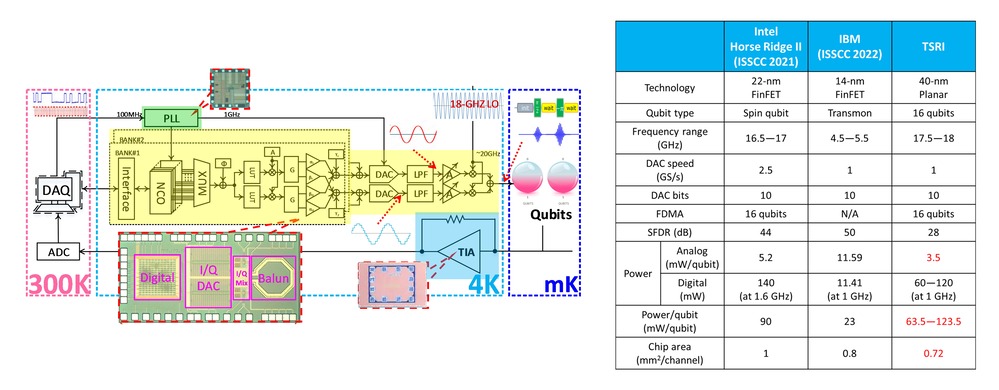
Future Tech | Electronics & OptoelectronicsTechnology Introduction: Our cryo-CMOS qubit controller consists of a digital control circuit, an I/Q numerically controlled oscillator, a high-speed digital-to-analog converter, an 18-GHz mixer, and a balun. The architecture provides programmable control of the output signal for manipulating qubit states. This technology plays a pivotal role in replacing room-temperature electronics for a large-scale quantum computer. Industry Applicability: Cryo-CMOS enables scalable, energy-efficient quantum control at cryogenic temperatures, reducing wiring, signal loss, and costs. It technically, economically accelerates the commercialization of quantum computers and also has applications in sensors and communication. With Taiwan’s semiconductor industries, this technique can be one of the driving forces behind Taiwan quantum computing technology.
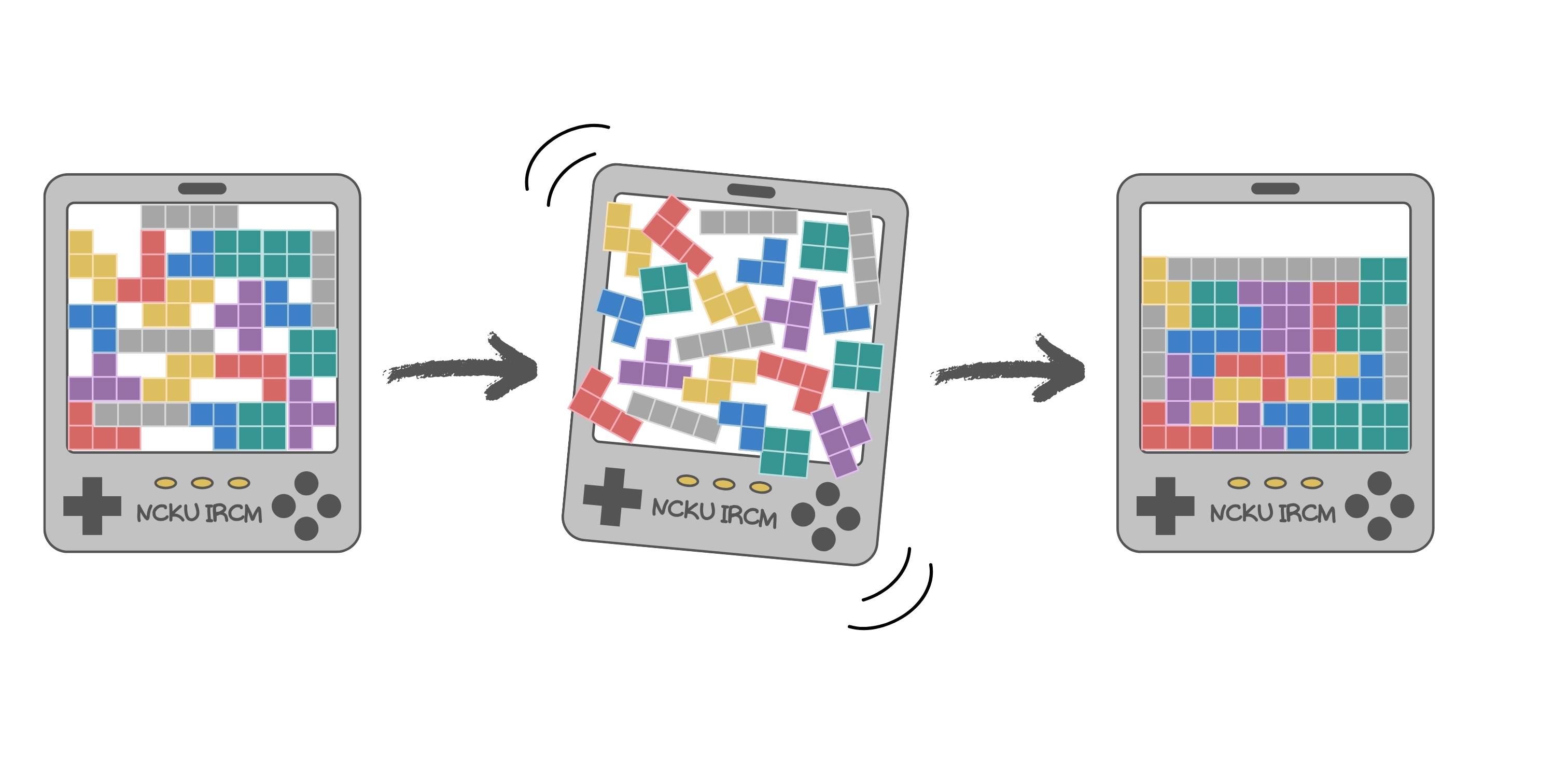
Future Tech | Electronics & OptoelectronicsTechnology Introduction: This project focuses on the development and promotion of Digital Annealing (DA) and GPU-based annealing technologies, combining hardware acceleration with software innovation. On the hardware side, DA and GPU annealing are applied to combinatorial optimization, scheduling, experimental design, drug molecule discovery, photomask inverse design, and MicroLED process optimization. On the software side, the work centers on QUBO model construction and transformation, AI-enhanced solving strategies, and GPU parallel performance improvement. The project will also establish a localized annealing platform to reduce cost, enhance flexibility, and ensure privacy, thereby supporting both academic research and industrial adoption. Through this integration of hardware and software, the project aims to accelerate practical applications, strengthen domestic competitiveness, and open new opportunities for innovation across pharmaceuticals, semiconductors, advanced manufacturing, and other fields. Industry Applicability: Digital Annealing (DA) accelerates drug discovery by improving molecular screening and binding energy evaluation, thus enhancing efficiency and reducing experimental costs. It is a valuable tool for advancing new drug development. In combinatorial optimization, DA addresses key problems: solving scheduling for better workforce and resource allocation, optimizing routing for logistics and transportation, and tackling knapsack problems for portfolio and asset management. Beyond healthcare, DA is applicable in semiconductors for photomask inverse design, in display technologies for optimizing MicroLED fabrication, and in manufacturing for smarter scheduling and higher capacity utilization. These diverse applications highlight DA’s broad cross-industry potential as both a scientific and industrial innovation driver.
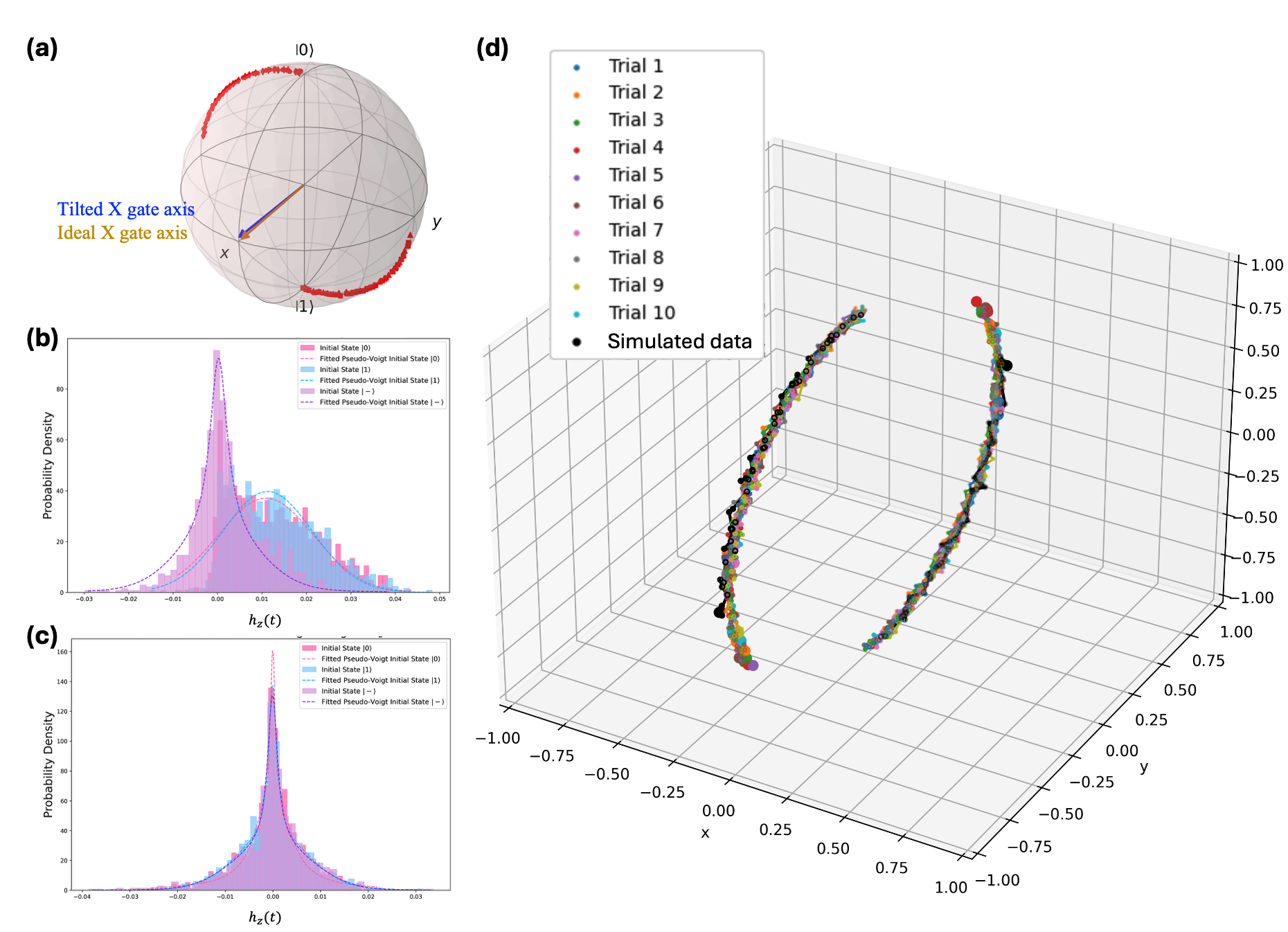
Future Tech | Electronics & OptoelectronicsTechnology Introduction: Quantum computers aren’t just powerful calculators—they reveal nature’s hidden secrets. By combining chemical theory, quantum noise characterization, and noise-assisted simulation, we’ve developed innovative algorithms that overcome traditional limits in chemical modeling. Through our demo, we showcase how quantum noise can reproduce energy transfer in photosynthesis and drive breakthroughs in materials and drug discovery. Industry Applicability: This technology enhances the practical utility of quantum computers in chemistry and materials modeling by improving computational accuracy and stability under noise. It holds industrial potential for applications in drug discovery, green energy materials design, and quantum software validation.
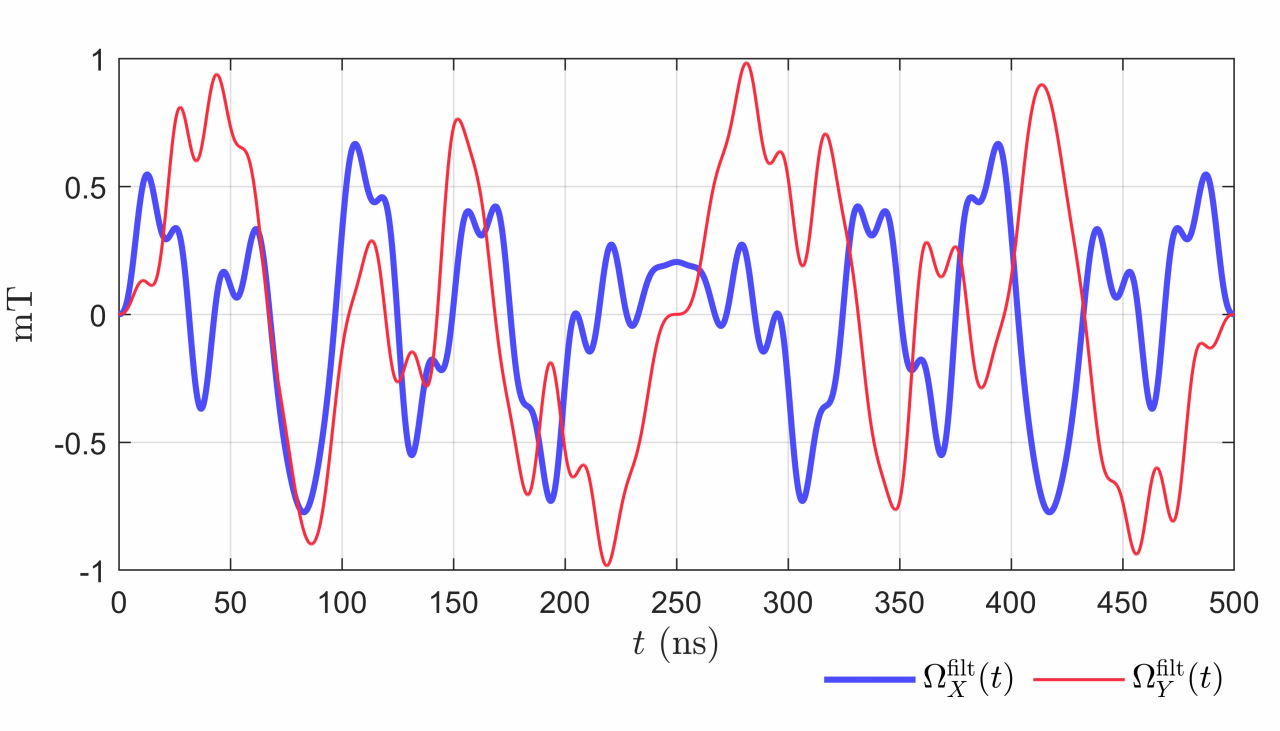
Future Tech | Electronics & OptoelectronicsElectron spin qubits in silicon quantum dots (QDs) are a promising solid-state system for quantum computing. To achieve fault-tolerant quantum computation, constructing high-fidelity and robust quantum gates to meet the stringent requirements is an important issue. We aim to develop such technology to construct robust quantum gates with fault-tolerant gate fidelities for the QD spin-qubit system.
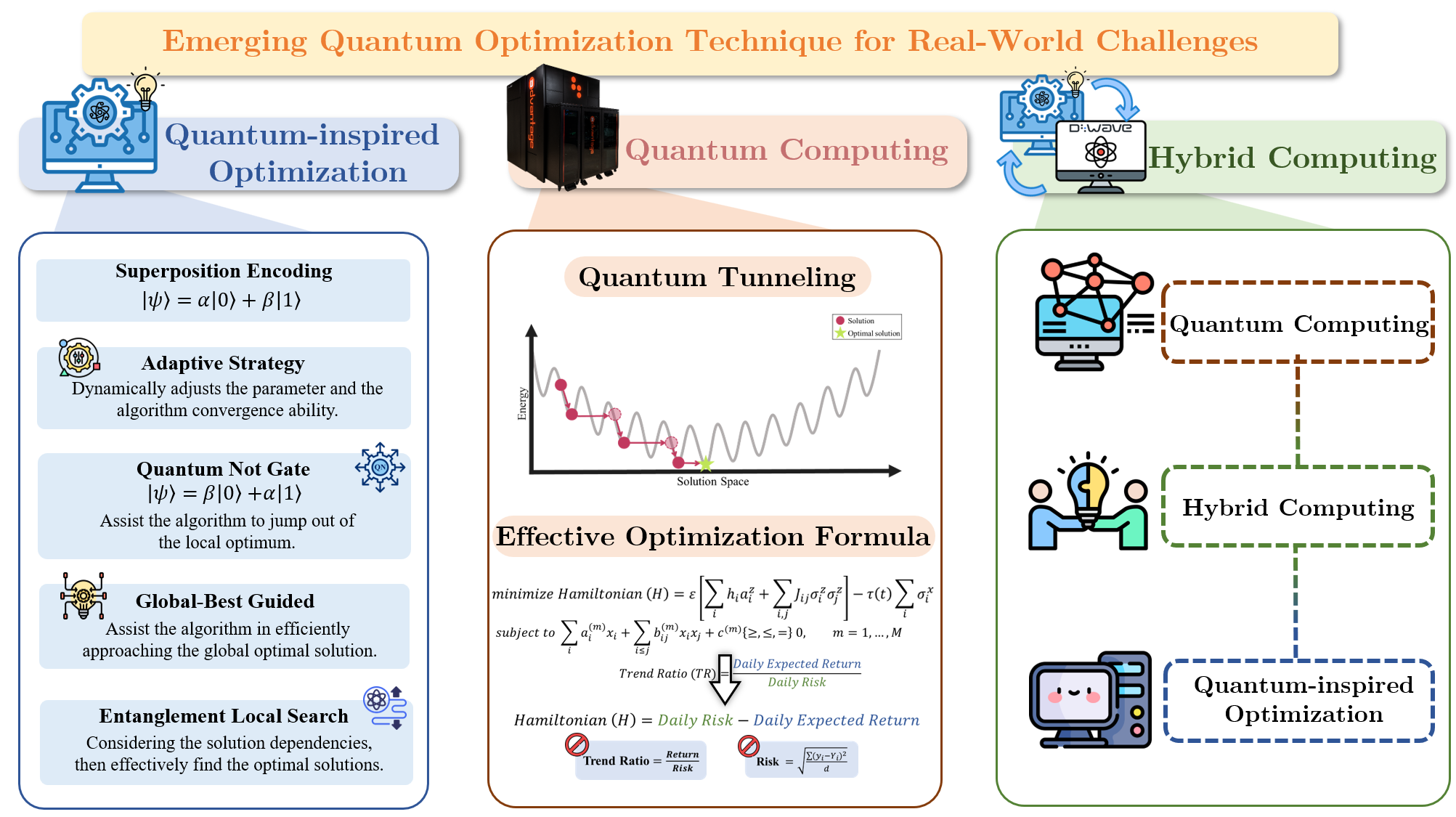
Future Tech | Information & CommunicationsTechnology Introduction: We integrate novel quantum-inspired algorithms with quantum computing, leveraging classical and quantum advantages to invent efficient optimization methods for complex problems. Applications span finance, industry, and quantum technologies, significantly reducing search time, enabling multiobjective models, and introducing visualization interfaces to enhance adoption in both academia and industry. Industry Applicability: This technology applies to fintech, Industry 4.0, and quantum areas, including portfolio optimization to balance risk and return, optimizing aluminum extrusion parameters to improve quality, accelerating quantum and reversible circuit synthesis, and developing multiobjective models for diverse needs. A visualization interface lowers expertise barriers. Overall, it delivers real industrial value.
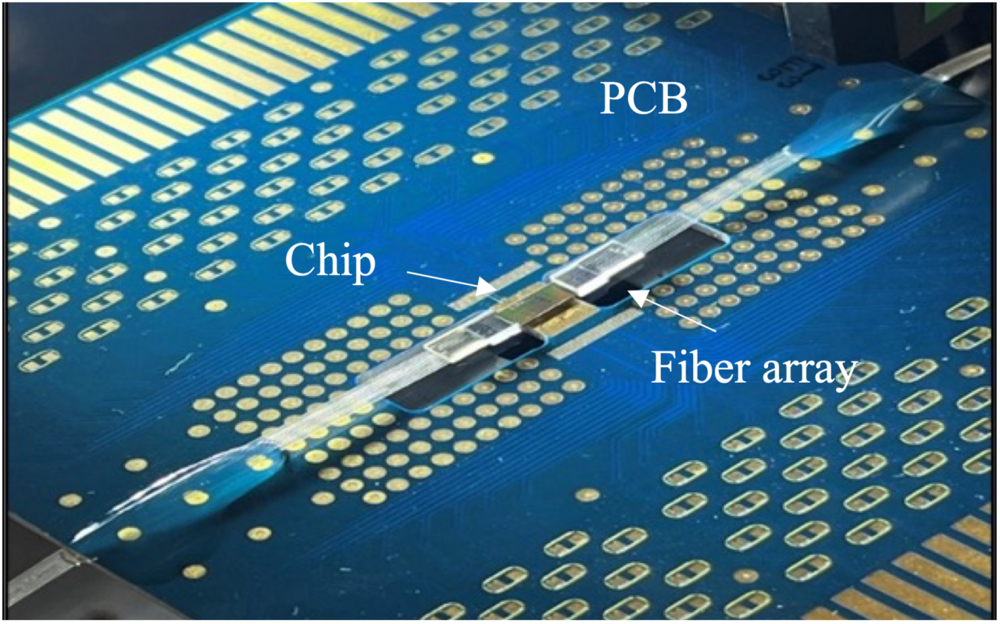
Future Tech | Electronics & OptoelectronicsTechnology Introduction: We have developed a novel Si₃N₄-Si quantum photonic platform for continuous-variable (CV) quantum optics operations, which will also be used to implement a quantum random number generation (QRNG) chip. The platform is packaged with a low-noise, high-speed transimpedance amplifier (TIA) circuit board in an enclosure to form a portable readout module for on-board homodyne detection of quantum noise. Industry Applicability: CV quantum optics enables room-temperature and deterministic quantum operations, making them ideal for quantum communication, computing, and sensing. Yet, most current systems are bulky and unsuitable for real applications. Our project’s integrated quantum photonics platform addresses this challenge by implementing quantum optics on a chip, delivering a compact, practical, and scalable solution.
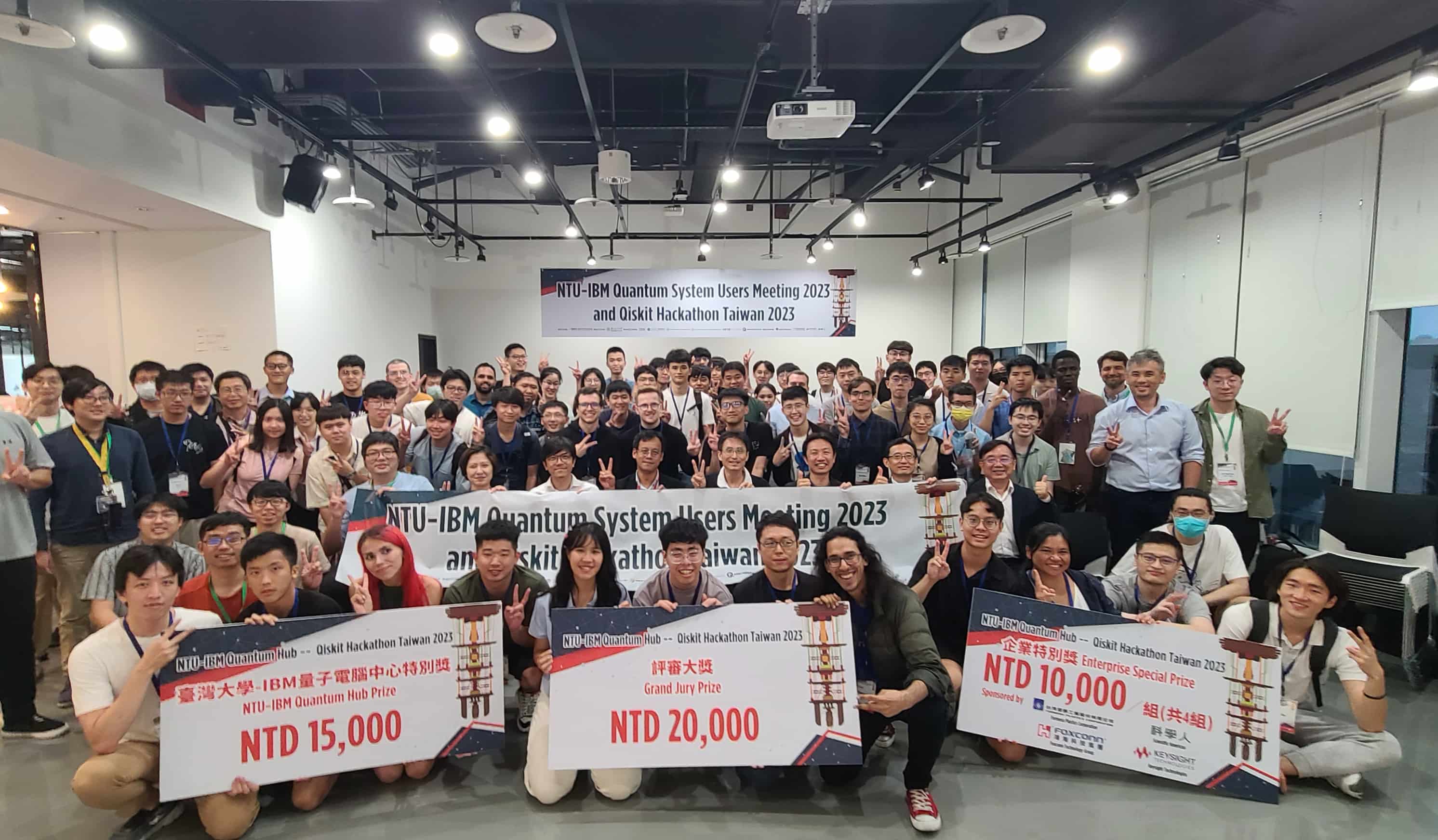
Future Tech | Electronics & OptoelectronicsTechnology Introduction: NTU IBM Q Hub, a collaboration between National Taiwan University and IBM, serves as a hub for quantum education, outreach, and research. By providing access to IBM’s cloud-based quantum computing platform, the Hub enables students and researchers to explore algorithms, perform simulations, and gain hands-on experience with real quantum devices. The Hub delivers educational programs ranging from introductory workshops to advanced courses and organizes hackathons and outreach events, fostering awareness and skills across different levels. This integrated approach helps bridge academic learning with practical experimentation, empowering a broader community to engage with the possibilities of quantum technologies. Industry Applicability: From an industrial perspective, NTU IBM Q Hub plays a crucial role in preparing industries for the quantum era. By leveraging IBM’s quantum platform, companies can begin experimenting with quantum applications in areas such as drug discovery, materials design, supply chain optimization, and financial risk analysis. Hackathons, workshops, and training programs cultivate skilled talent while fostering collaboration between academia and industry. This dual emphasis on education and practical exploration ensures that enterprises not only understand the theoretical promise of quantum computing but also gain pathways to test and implement emerging quantum solutions, ultimately accelerating innovation and enhancing competitiveness in a rapidly evolving technological landscape.
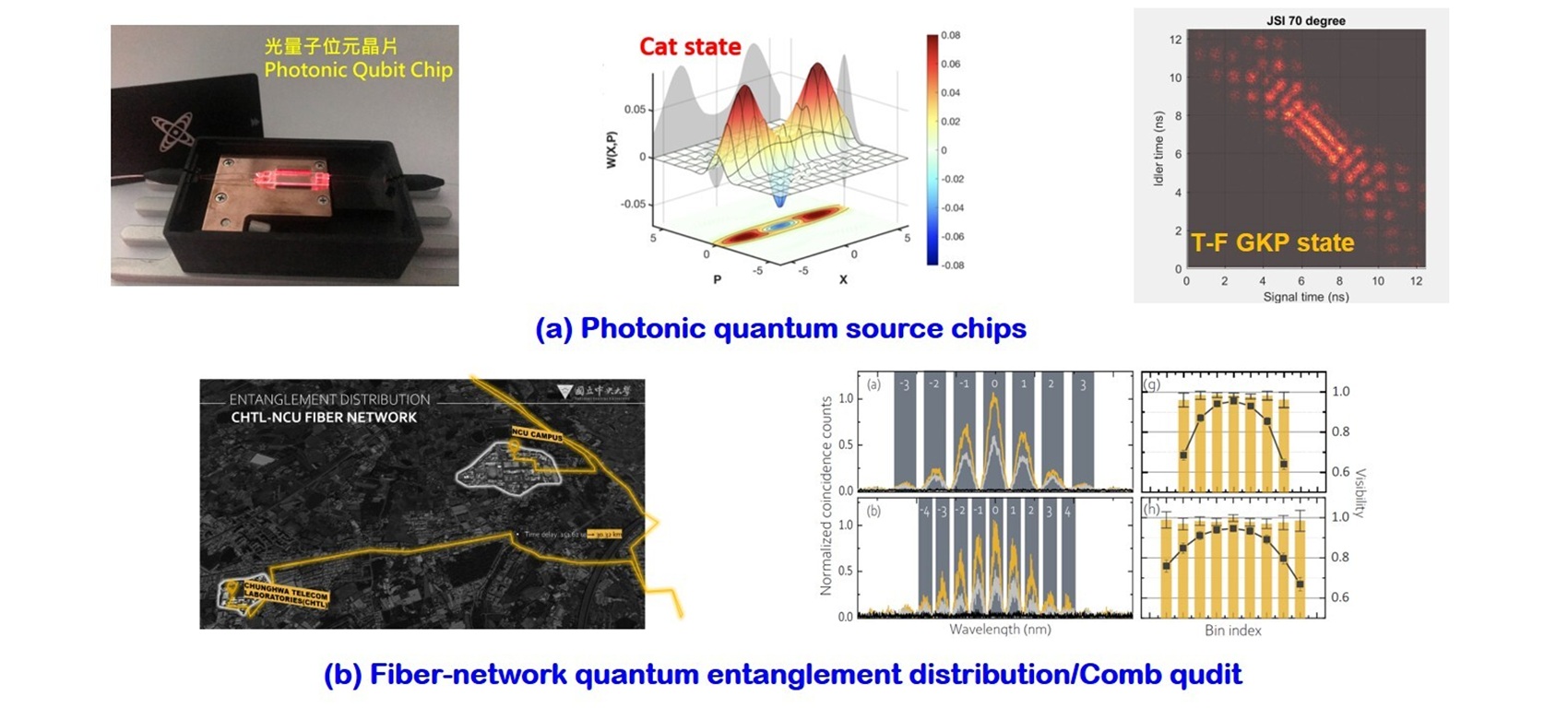
Future Tech | Electronics & OptoelectronicsTechnology Introduction: Among all the existing quantum computing technologies, photonic quantum computers (PQC) are the only chip-scale solution possible to work at room temperature and readily compatible with nowadays semiconductor and optical communication network systems. In this technique, we aim to develop fault-tolerant non-Gaussian state photonic integrated quantum computing chips by combining core technologies of integrated quantum light sources, quantum metrology, silicon photonics, quantum state validation, quantum error code correction, and photon number resolving detectors, a critical step toward a cutting-edge practical PQC. Industry Applicability: Three key hardware components have been developed for realizing our proposed photonic quantum computing technology, including photonic qubit sources, linear optical quantum circuits, and single-photon detectors. These components can all be highly integrated using advanced integrated photonic (silicon photonics) chip technology. This technology has broad applications not only in quantum computing, quantum communications, and quantum sensing, but also in next-generation optical communications, lidar, medicine, defense, and aerospace industries. Furthermore, the quantum state reconstruction and error-correction schemes developed by our team can also accelerate the commercialization of optical quantum computing and promote the development of the quantum technology ecosystem.
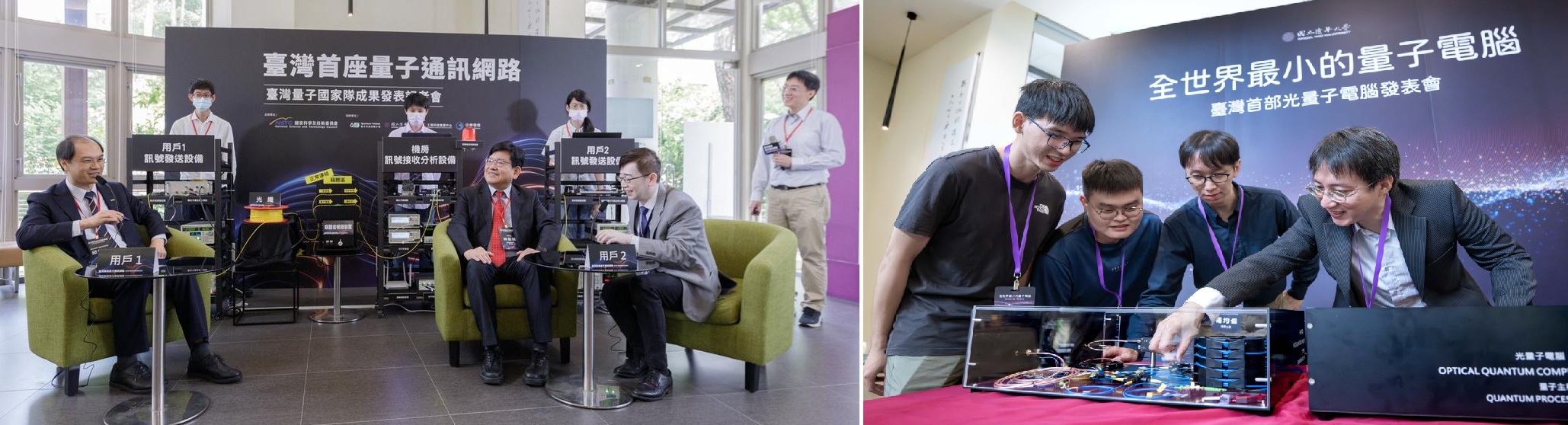
Future Tech | Electronics & OptoelectronicsTechnology Introduction: Prototypes of quantum-encrypted networks and all-optical quantum computers have been developed. The quantum network prototype, aiming for multiple users, uses a star topology to connect all nodes via an untrusted relay. Secret keys can be established between users through the quantum state projection at the relay. The quantum computer prototype exploits a novel technique to encode and manipulate information in high dimensions, which enables the implementation of quantum algorithms using only one photon. Industry Applicability: The quantum-encrypted network enables secret key distribution and increases the security of data transmission on the Internet. It is also beneficial for developing accurate time synchronization and high-resolution telescopes. The all-optical quantum computer reduces the required number of physical qubits, quantum gates, and possible computing errors. It is useful for developing new drugs and materials, improving batteries, weather broadcasting, and financial investment.
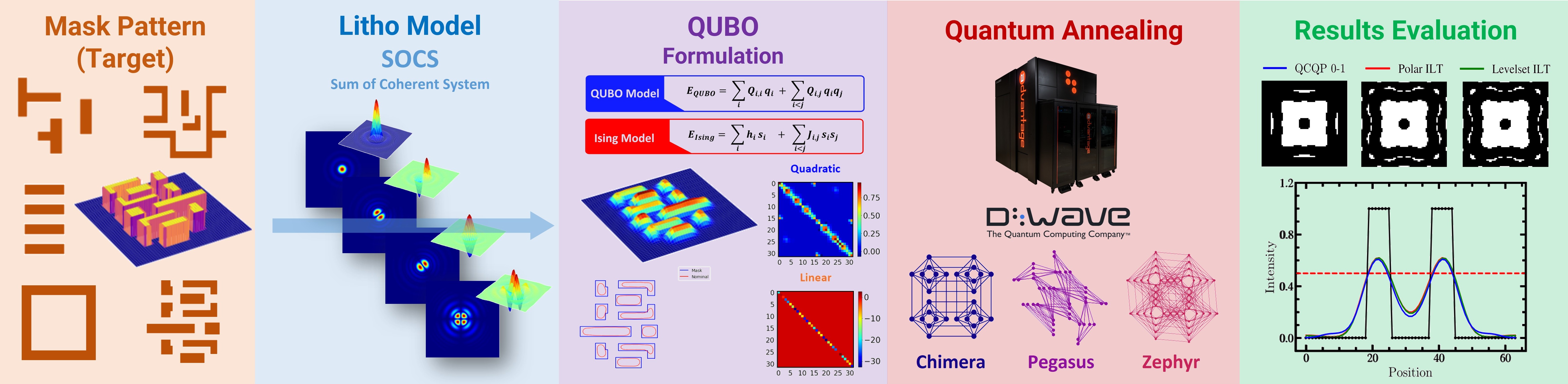
Future Tech | Electronics & OptoelectronicsTechnology Introduction: This project develops a "Quantum Annealing-based Framework for Reticle Optimization" using D-Wave quantum annealers to solve mask optimization challenges in semiconductor lithography. Traditional Inverse Lithography Technology (ILT) suffers from convergence issues, local minimum traps, and excessive computation time. We formulate ILT as Quadratic Unconstrained Binary Optimization (QUBO) problems, leveraging quantum properties for rapid global minimum search. The framework demonstrates quantum annealing's potential in semiconductor manufacturing optimization. Industry Applicability: First-ever quantum computing application to semiconductor lithography mask optimization, overcoming traditional ILT computational bottlenecks. Novel QUBO transformation methodology addresses high-order cost function limitations while achieving theoretical <10μs optimization speed through a quantum annealer. Use a dynamic cost function modification technique to ensure quadratic approximation accuracy. This breakthrough introduces quantum advantage to semiconductor manufacturing, pioneering a new computational lithography paradigm and establishing critical foundations for future large-scale quantum applications.
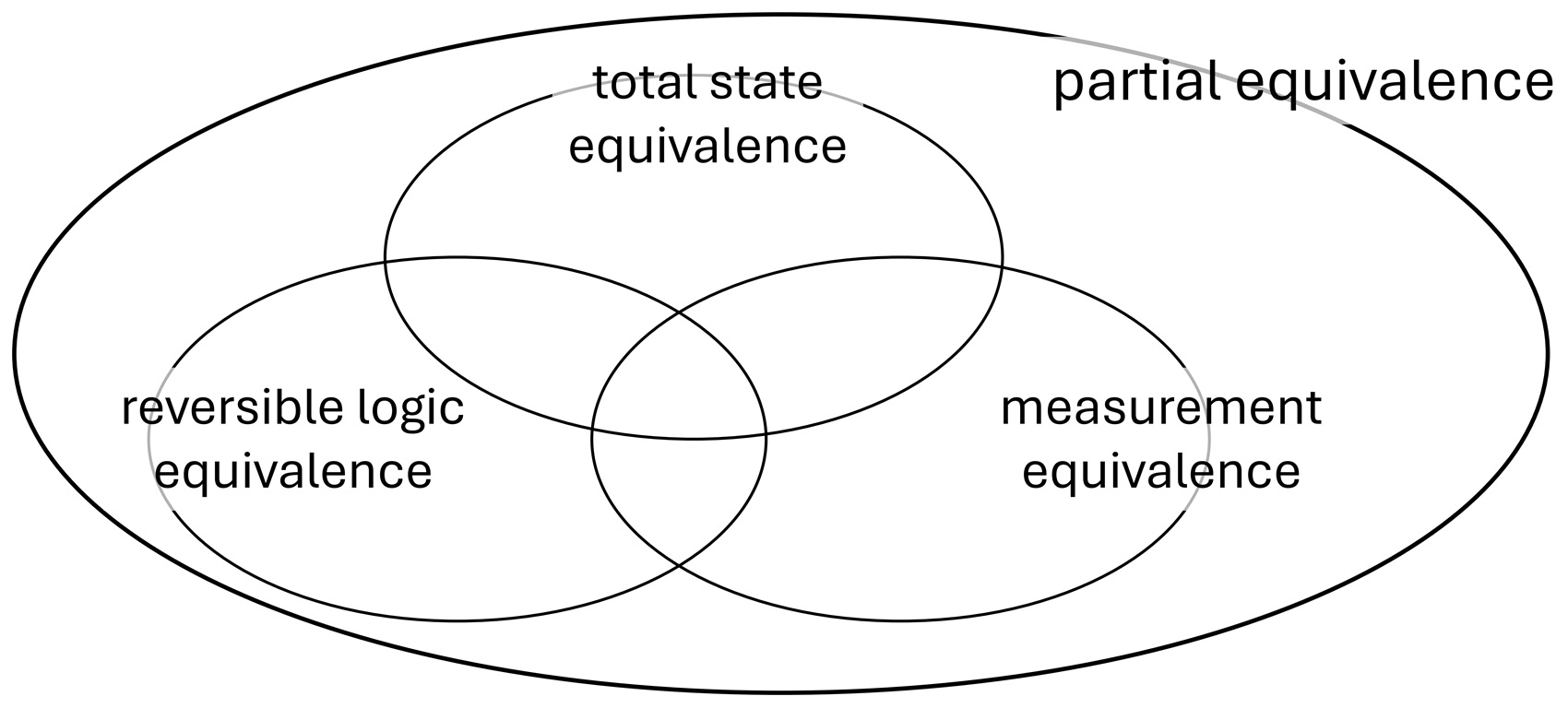
Future Tech | Electronics & OptoelectronicsTechnology Introduction: We propose quantum circuit verification approaches, containing partial equivalence checking and a vanishing-state-based assertion framework. The former extends equivalence definitions to improve synthesis and simplification flexibility; the latter automatically generates assertion circuits to monitor states during execution and detect errors early, enhancing reliability and operational efficiency. Industry Applicability: We propose partial equivalence, relaxing quantum circuit equivalence and enhancing synthesis flexibility. From definitions to algorithms, our framework fills development gaps. The dynamic assertion framework is the first and only method to systematically and automatically generate quantum assertion circuits, playing a key role in reducing costs and improving efficiency in quantum computation.
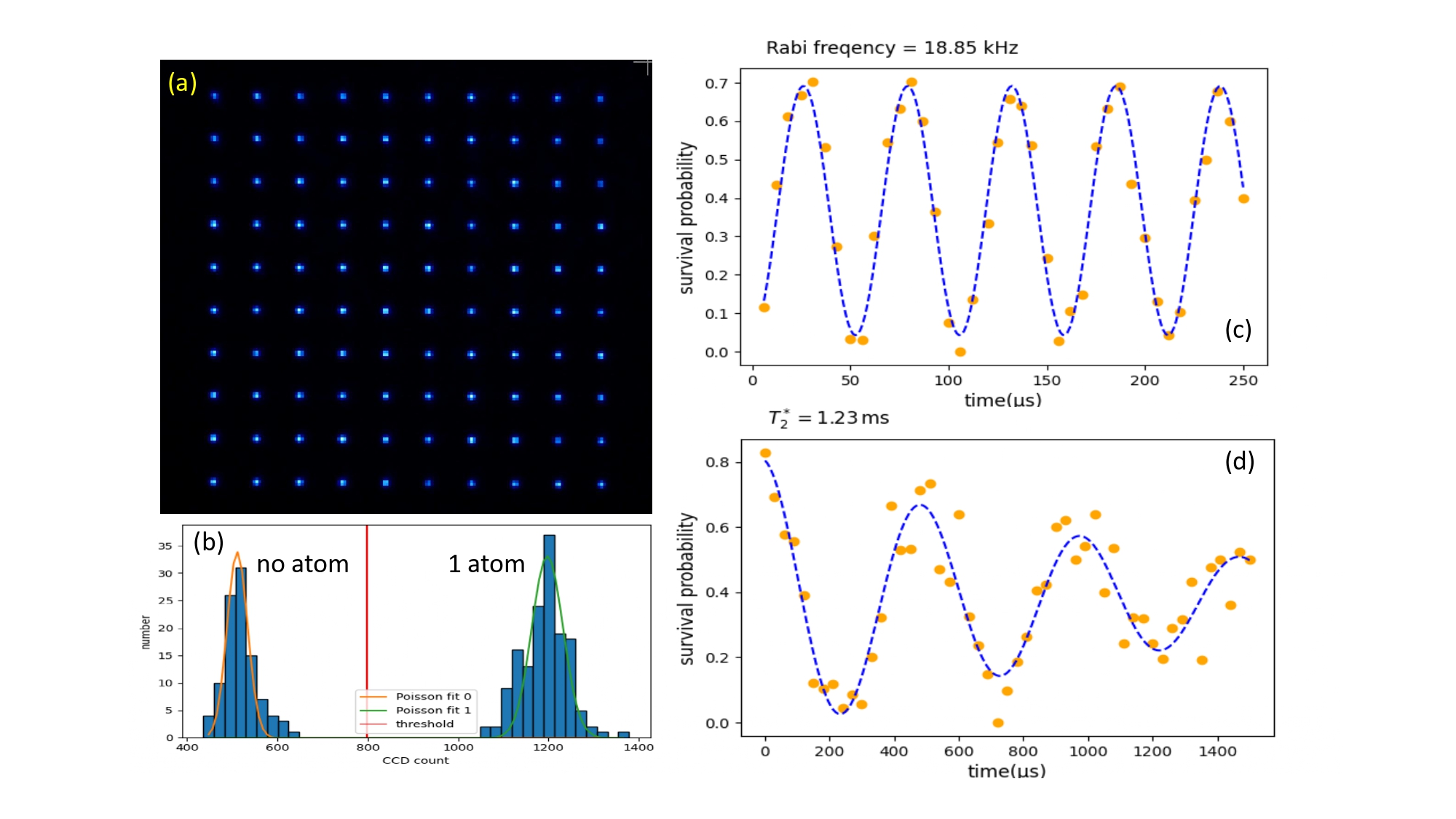
Future Tech | Electronics & OptoelectronicsTechnology Introduction: We use a spatial light modulator to generate two-dimensional optical tweezer arrays and trap single atoms. Qubits are encoded in hyperfine atomic states. Single qubit gates are realized by microwave or laser Raman transition. Two qubit gates are realized by laser-controlled Rydberg dipolar interactions. Quantum algorithm is realized by using mobile tweezers to transport atoms to Raman and Rydberg laser interaction zones to conduct the quantum circuit of one- and two-qubit gate sets. Industry Applicability: Atom-based quantum processor can be used to solve the graph combinational optimization problem, e. g. it can be applied to finding the most economical solution of electric vehicle stations or public bicycle stations problem. It can be used in quantum machine learning problem, such as the identification of toxic molecules or the prediction of timeseries.
Future Tech | Electronics & OptoelectronicsTechnology Introduction: The idea of quantum virtual machine is to build software stack based on the abstraction level: In application layer, we perform quantum simulation of topological dynamics and field theories. In quantum-classical hybrid architecture layer, we study the synergy between quantum circuit, tensor-network, and machine learning. At middleware layer, we explore device independent optimization and characterization of QPU and bridge it to firmware layer. Finally, we integrate the software stack with QPU. Industry Applicability: Universal Quantum Computer Diagnostic & Recommendation System, which based on randomized measurement toolbox, has obtained patent in Taiwan. By quantum circuit compression, one maximizes the quantum advantage of NISQ devices, enabling more complex simulations. Exploring huge configuration space via quantum generative model has become an essential part in quantum-classical hybrid machine learning.
Future Tech | Electronics & OptoelectronicsComing soon!