Select Field
Select Ministry
5 results
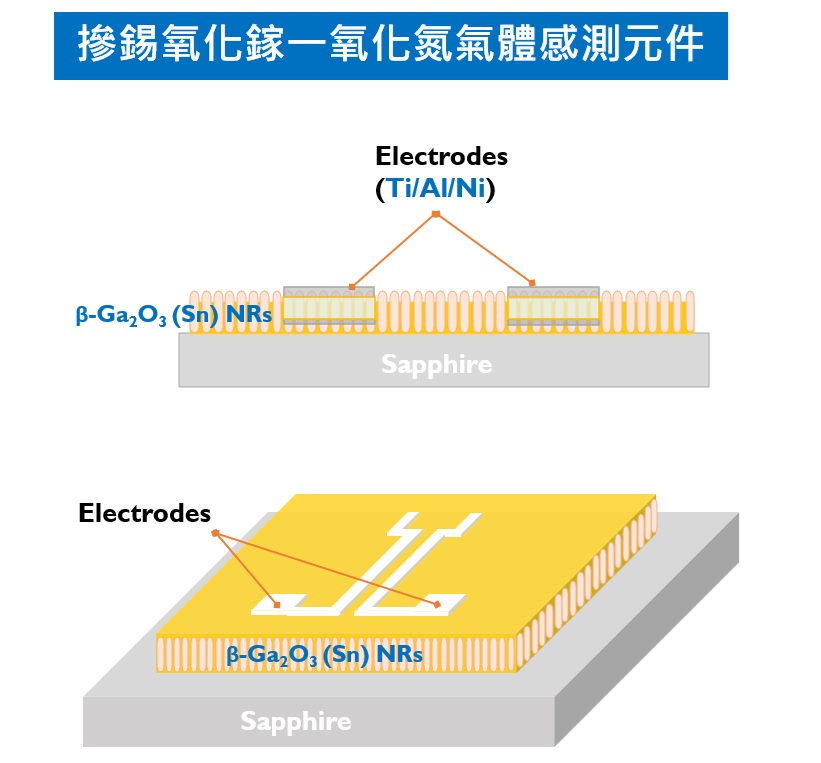
Technology Introduction: 1. The β-Ga₂O₃ (Sn) nanorod thin film fabricated in this study exhibits a rapid response time of 2 seconds, an efficient recovery time of 4 seconds, and a detection limit of 30 ppb for nitric oxide (NO) gas. 2. The doping ratio of tin (Sn) causes the nanostructure of β-Ga₂O₃ to gradually transform from a rod-like to a spindle-like morphology. 3. Post-annealing under an oxygen atmosphere improves the gas sensing mechanism. Industry Applicability: 1. In modern medical diagnostics, exhaled breath analysis plays a vital role. Fractional exhaled nitric oxide (FeNO) levels typically range from 25 to 80 ppb, with levels exceeding 50 ppb considered elevated in asthma patients. This technique can be applied in asthma monitoring and smart healthcare devices. 2. It is also applicable to environmental sensing modules for use in automotive exhaust control, emission detection and the monitoring of explosive gases in various industrial fields.
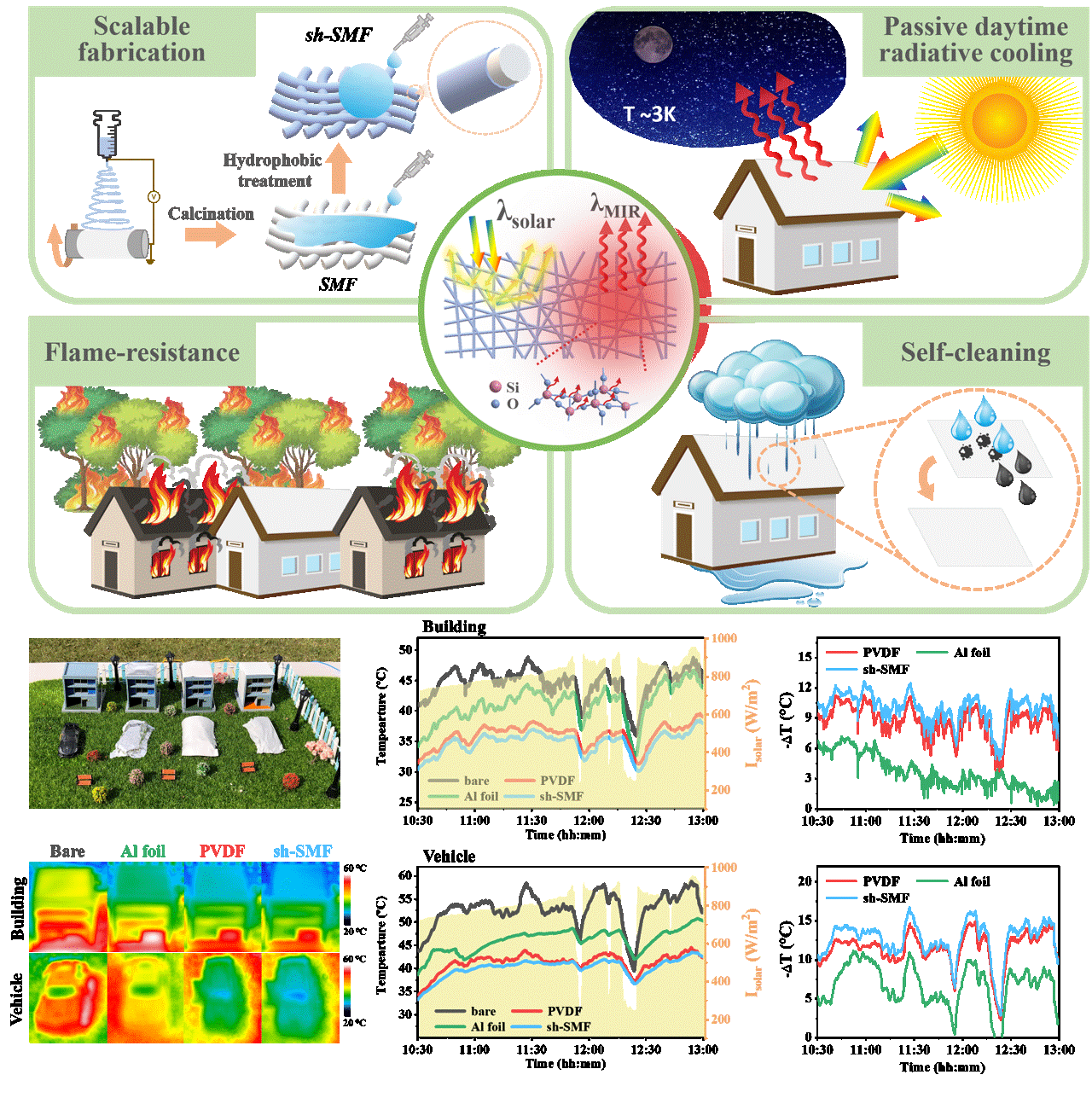
Future Tech | Materials & Chemical Engineering & NanotechTechnology Introduction: For sustainable energy-efficient applications, through advanced optical engineering, our novel passive daytime radiative cooling (PDRC) materials exhibit high average reflectivity or transparency (>95%) in the solar wavelength region and high average emissivity (>95%) in the atmosphere window wavelength region. We anticipate that these PDRC materials will effectively mitigate the urban heat island effect, improve the low-grade waste heat recovery and reduce carbon dioxide emissions. Industry Applicability: The PDRC metamaterials can provide the great potential to accelerate the pace of net-zero emissions to limit global warming. Also, PDRC films provide a facile, eco-friendly cooling solution to dissipate trapped heat in optoelectronic devices, such as solar panels. The attractive power generation ability of the PDRC/TEG system suggests its great potential in low-grade waste heat recovery and environmental energy harvesting by consistently generating power in both the daytime and nighttime.
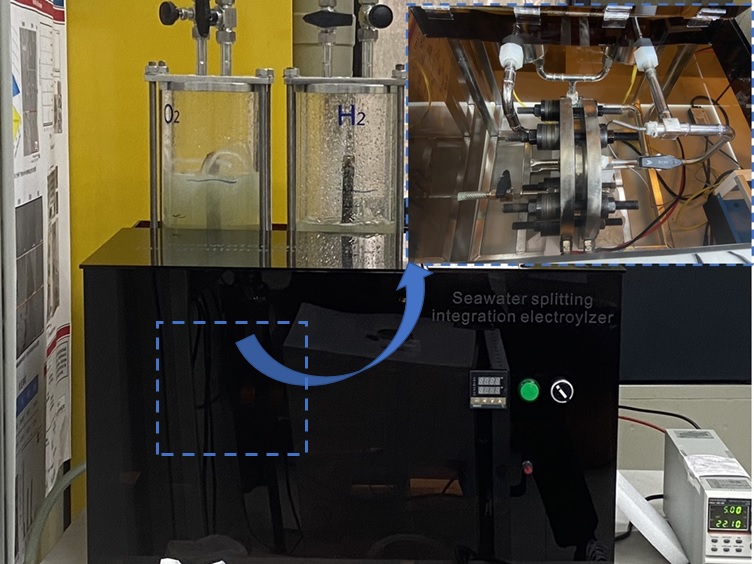
Future Tech | Materials & Chemical Engineering & NanotechTechnology Introduction: This research develops electrocatalytic seawater hydrogen production using high-entropy catalysts and membrane electrolysis for efficient, stable hydrogen energy. Materials prepared via PLMS and hydrothermal synthesis achieve low onset voltages and stability of 1500 hours (100 mA/cm²) and 1000 hours (1 A/cm²). The technology, spanning catalyst development to electrolyzer assembly, enables practical hydrogen production. Industry Applicability: This study advances seawater hydrogen production using high-entropy catalyst anodes grown on nickel substrates via pulse laser scanning, achieving low voltage and high durability for industrial use. Optimized cathodes boost electrolysis efficiency, enabling scalable electrolyzer assembly. Extended to membrane and alkaline electrolyzers, enhanced designs improve hydrogen output and purity. It also explores wastewater purification alongside hydrogen production, supporting green energy.
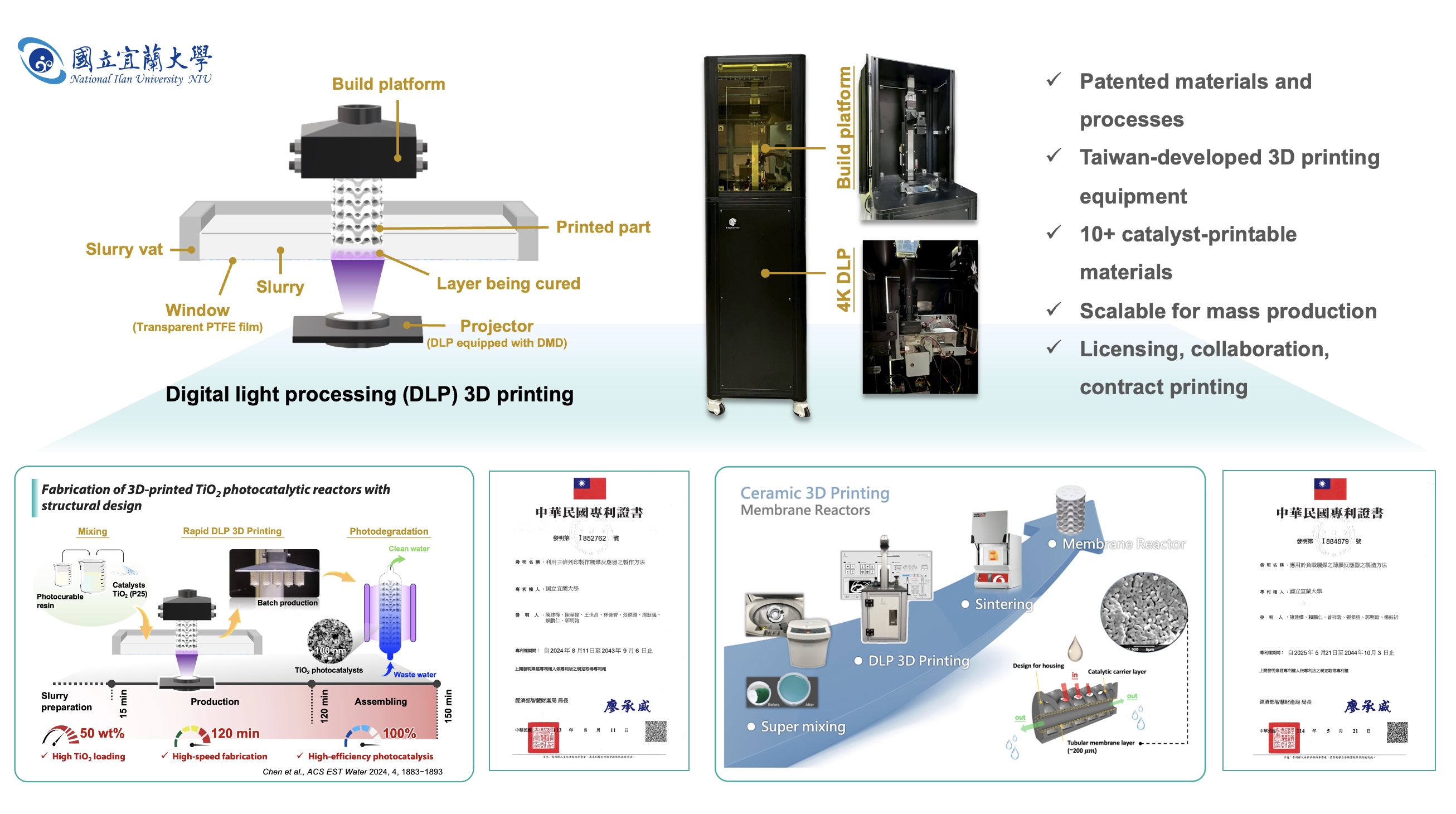
Future Tech | Materials & Chemical Engineering & NanotechTechnology Introduction: This technology enables a scalable 3D printing process for catalytic systems, featuring high solid-loading resins, topological structures, DLP printing, and post-processing to produce efficient reactor beds. Validated with TiO₂, zeolites, MOFs, metals, and ceramics, it supports hydrogen production, pollutant removal, and VOC control for net-zero applications. Integrated with AI and digital manufacturing, the process holds two invention patents and supports smart catalytic reactor deployment. Industry Applicability: This technology offers a scalable catalytic 3D printing platform with high solid-loading resins and integrated printing and post-processing. It supports TiO₂, zeolites, MOFs, metals, and ceramics. Standard and custom materials, modules, and contract manufacturing are available for research, chemical, and equipment sectors. With flexibility, scalability, and patents, it is applied in net-zero, hydrogen energy, and carbon capture, showing strong commercialization and global potential.
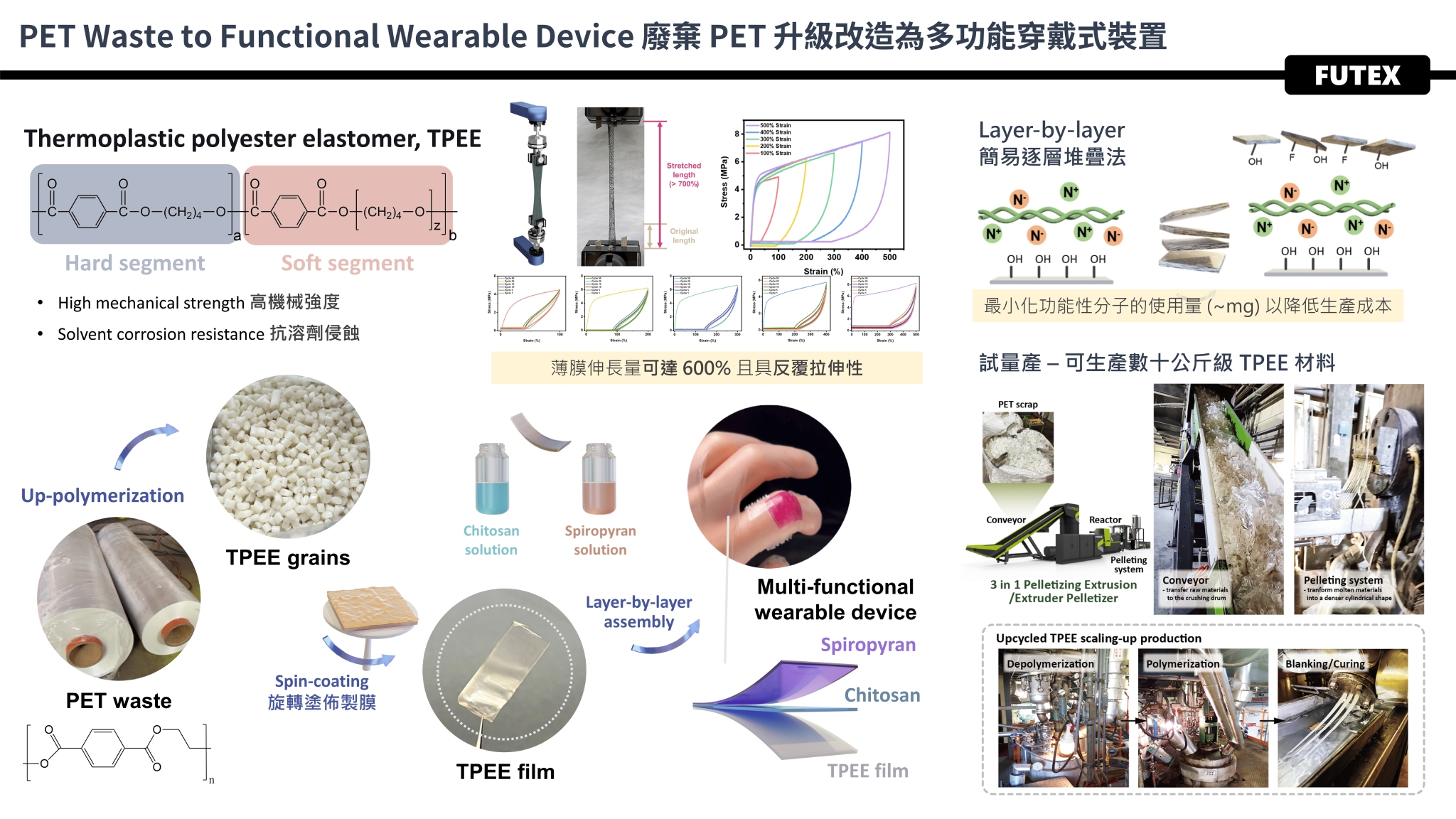
Future Tech | Materials & Chemical Engineering & NanotechTechnology Introduction: Our upcycled wearable device features intelligent environmental sensing through a simple deposition process, enabling dual responsiveness to UV light and acid/base vapors. Enhanced with a conductive, self-healing coating, it is well-suited for wearable electronics and anticounterfeiting applications. Compared to conventional sensors, it offers superior chemical resistance, adaptability, recyclability, and sustainability—significantly enhancing the value and competitiveness of recycled plastics. Industry Applicability: Our technology applies upcycled PET combined with a self-healing coating and environmental sensing functions to develop a wearable device integrating anti-counterfeiting and intelligent monitoring. This material rapidly self-heals at room temperature, extending device lifespan, thereby supporting carbon neutrality goals. Compared to traditional sensors, it offers superior environmental resistance, demonstrating strong industrial potential in smart wearables and green electronics.
Future Tech | Materials & Chemical Engineering & NanotechComing soon!