Future Tech
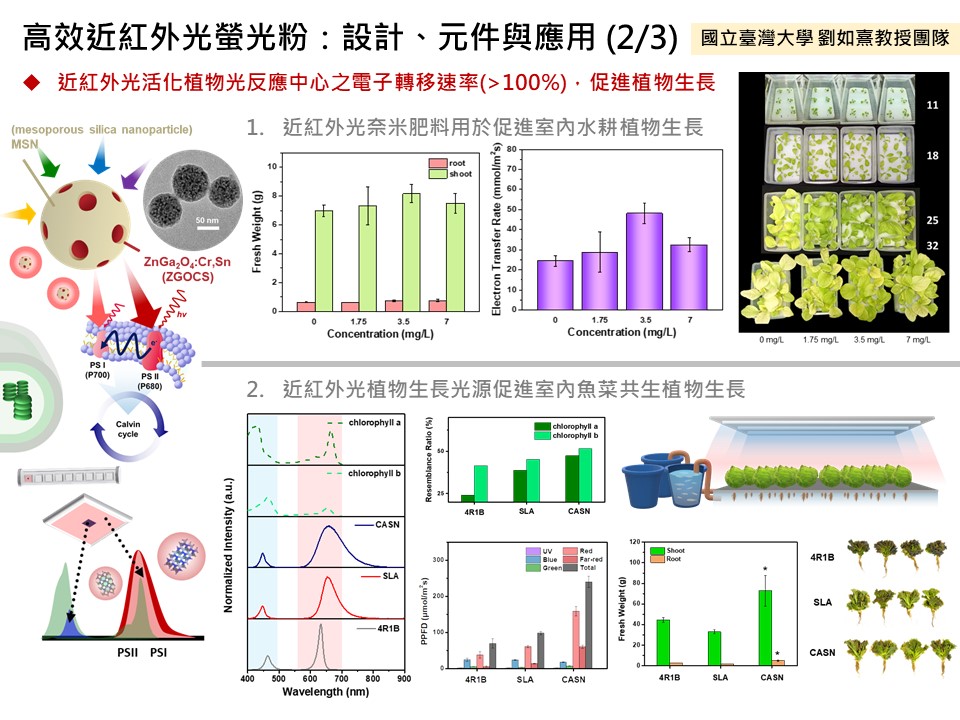
Near-infrared (NIR) light can be divided into NIR-I (700–1000 nm) and NIR-II (1000–1700 nm) according to wavelength. The NIR-II quantum efficiency of NIR phosphor can approach 100% by cation substitution and energy transfer strategies. The applications include promoting plant growth (nano fertilizers and plant growth light sources), security and anti-counterfeiting, vein imaging, and photobiomodulation for brain disease treatment.
Future Tech | Materials & Chemical Engineering & Nanotech
RF Power Sources are constructed using Solid-State Power Amplifier systems. This includes RF (500 Mhz - 900 W) combining technology, where four 80 kW towers are combined to provide a total power source of 300 kW.
Future Tech | Electronics & Optoelectronics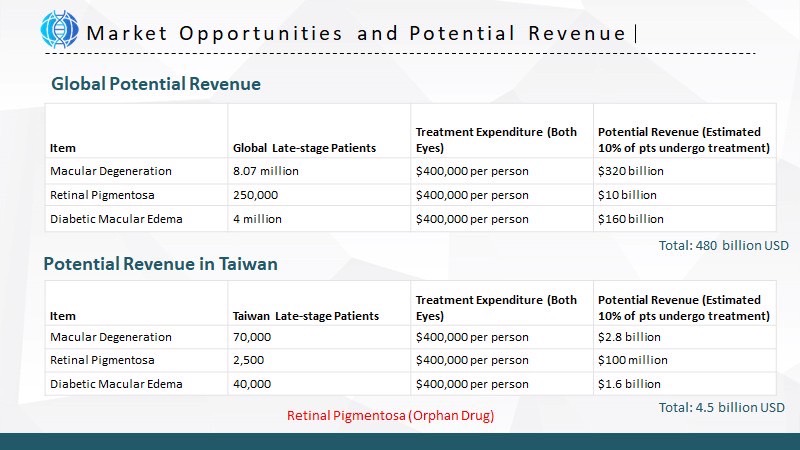
This technology's theoretical foundation lies in using small molecules to reprogram human fibroblast cells into retinal progenitor cells (CiRPC), making it the world's first chemically reprogrammed human retinal progenitor cell for clinical use. It regulates gene expression via specific signaling pathways to induce trans-differentiation, based on stem cell biology principles. This method avoids genetic modification and viral vectors, reducing potential safety risks. Our technology boasts the following key features and innovations: 1. Low mitotic retinal progenitor cells with no risk of teratoma formation or tumorigenicity: By utilizing these progenitor cells, we reduce the risk of adverse reactions such as teratoma or cancer formation during treatment, thereby enhancing the safety and reliability of therapy. 2. Precise cell reprogramming technology: We possess precise cell reprogramming technology capable of converting human fibroblast cells into retinal progenitor-like cells, addressing patients' photoreceptor degeneration issues, and enhancing their visual recovery. 3. High efficiency and low-cost reprogramming process: Our technology achieves a conversion efficiency of up to 42.8%, with a reprogramming time of just 5 days, and utilizes small molecules as reprogramming factors, reducing the cost of cell processes and potentially alleviating the economic burden on patients. 4. No genetic modification or viral intervention: Our cell reprogramming process does not require genetic modification and avoids viral intervention, thereby enhancing the safety and reliability of treatment. 5. Unique color visual recovery experience: The technology can differentiate into black-and-white sensitive rod cells and cone cells capable of receiving color visual signals. Through subretinal injection, induced retinal progenitor cells will provide patients with a more diverse vision recovery experience.
Future Tech | Biotechnology & Medical care
The invention includes methods for measuring the hydrolysis time of the glycan attached to membrane glycocalyx, accompanying the maximum wax remnant adhering to the cell membrane, and the maximum bias for polarizing the glycan of membrane glycocalyx. Using these two parameters as digital indicators of the malignancy of cancer cells can improve the accuracy of cancer assessment and reduce the chance of human misjudgment.
Future Tech | Electronics & OptoelectronicsComing soon!