

Intensified processes for the production of dichlorohydrin and epichlorohydrin

This study proposes processes that can significantly reduce the production costs of dichlorohydrin and epichlorohydrin. Dichlorohydrin is an important intermediate for synthesizing epichlorohydrin, a high volume of commodity chemical largely utilized in the production of epoxy resins. In the process intensification for the preparation of dichlorohydrin from glycerol, a simplified process for separating the azeotrope of dichlorohydrin and water without use of an entrainer is first proposed. Compared to a conventional process, this simplified process can increase the production efficiency of dichlorohydrin and achieve a significant reduction of about 70% energy consumption and 50% production costs. This technology has been confirmed in the experiments of a reactive distillation column in ITRI. Next, the process intensification application of the divided-wall distillation and vapor-recompression to the simplified process can further reduce 19% energy consumption and 50% total annual cost. Up to now, 10 patents has been submitted and 5 patents has been approved. In addition, in the study of process intensification for the epichlorohydrin synthesis by reacting allyl chloride and hydrogen peroxide, an optimal plant-wide process is designed to obtain high-purity product where an excess of allyl chloride is used to increase reaction conversion and the designed process can meet safety requirements. The proposed temperature control strategy designed by steady state analysis can stably control the product purity and this plant-wide process can also be operated in a safe region without explosion under feed rate disturbances. Up to now, 2 patents have been submitted and 1 patent has been approved. These research findings can apply to the petrochemical and chemical industries that produce dichlorohydrin, epichlorohydrin, and epoxy resin.
Innovative valorization of non-hazardous oily sludge for the production of fuel oil and mesoporous magnetic carbon composite materials
Investigations of probes for the applications in the high frequency and high speed IC testing system
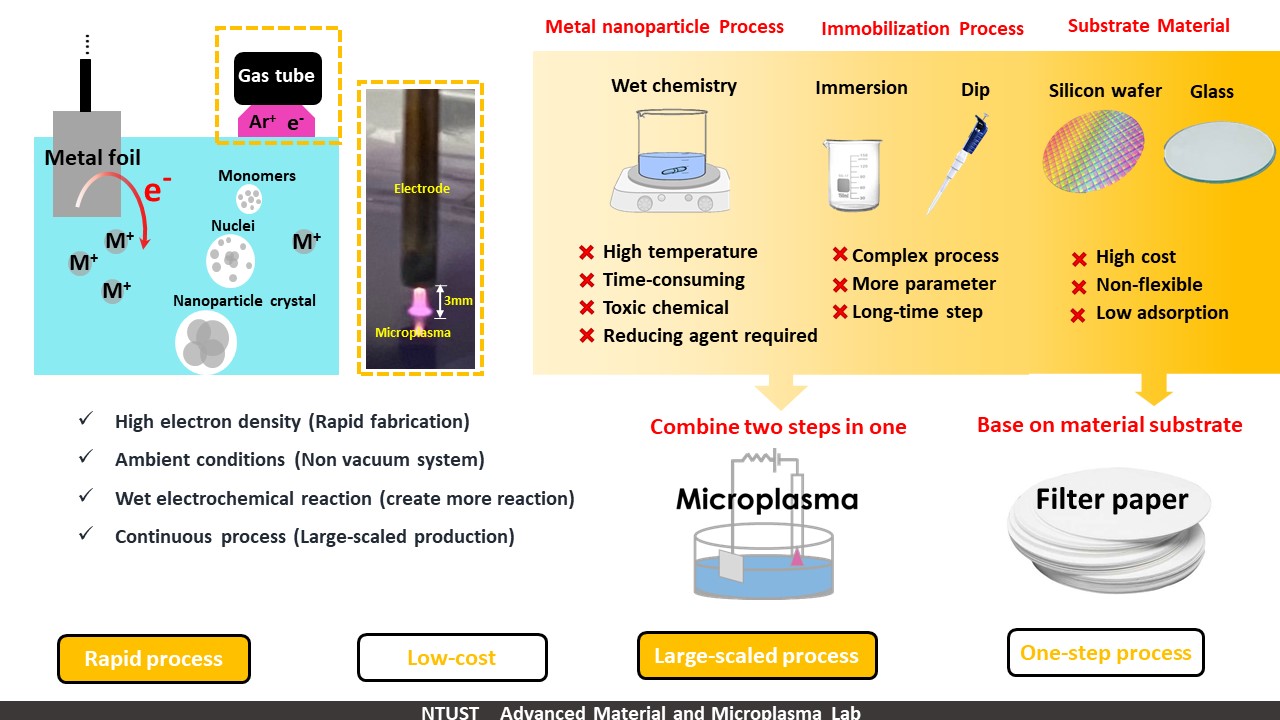
Three dimension nanoporous nanomaterial Microplasma-Enginnered assemblies on paper substrate for hydrogen gas production , surface-enhanced Raman scattering and catalytic reduction
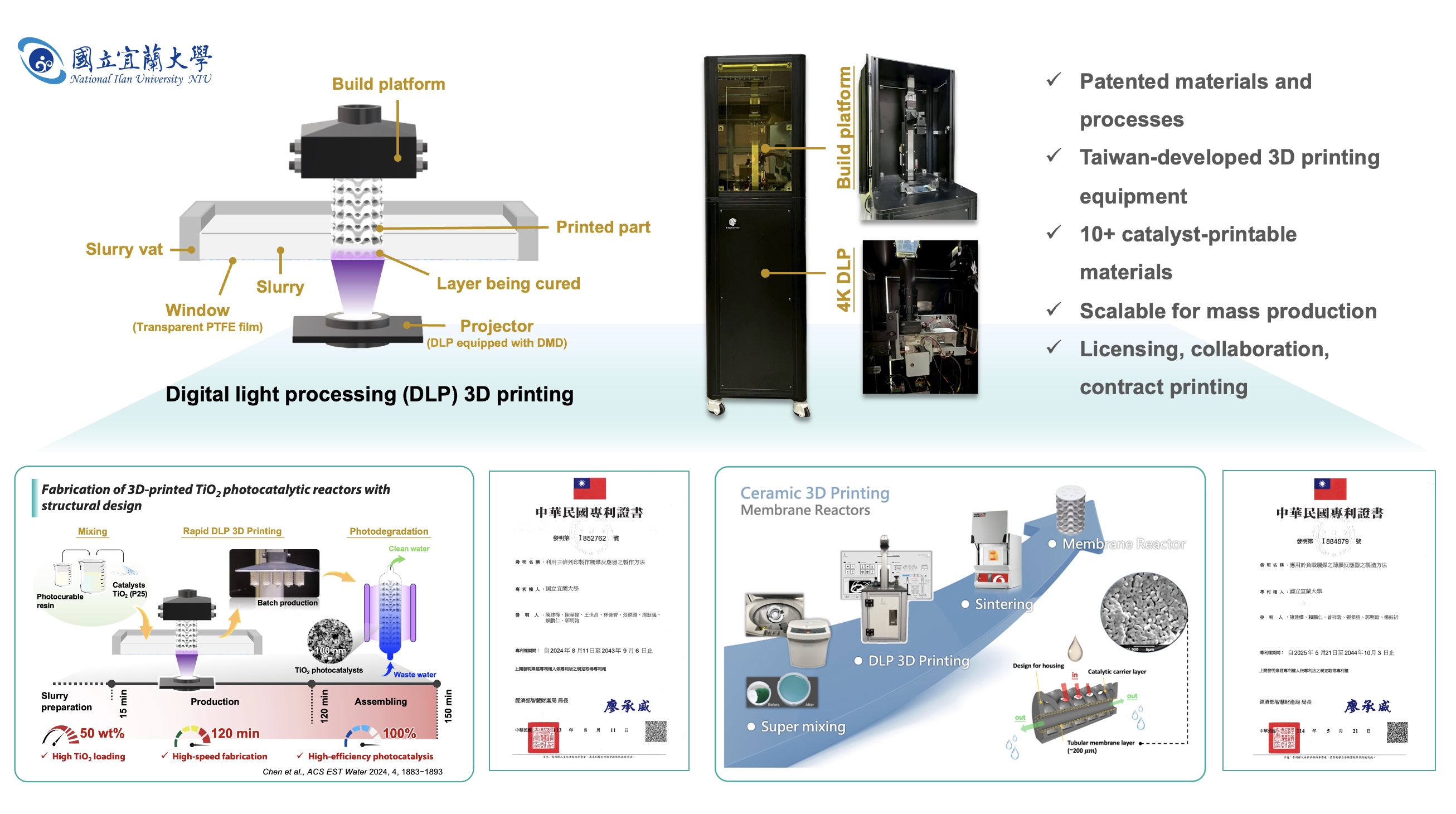
Scalable Catalytic 3D Printing Process Development: Enabling Smart Transformation in Chemical Reactor Bed Design and Manufacturing
Technology maturity:Trial production
Exhibiting purpose:Display of scientific results
Trading preferences:Technical license/cooperation
*Organization
*Name
*Phone
*Main Purpose
*Discuss Further
*Job Category
*Overall Rating
*Favorite Area
*Key Tech Focus
*Willing to Receive Updates?
Other Suggestions
Coming soon!