

Fast Cancer Screening and Prognosis Assessment and Prediction of Treatment Response in Chronic Kidney Disease by Using Synchrotron Infrared Microscopy

"Infrared wax physisorption kinetics (iR-WPK) provides a glyco-histopathological imaging analysis for examining tissue sections, which utilizes n-alkanes (n-CnH2n+2) with carbon number (CN) from 20 to 34 and beeswax as glycan adsorbents for targeting similar longitudinal length of glycans of glycoconjugates anchoring in the cell surface.
It is an in-situ non-destructive method of examining tissue sections for cancer screening and prognosis prediction for chronic kidney disease by profiling aberrant glycans covalently-attached to both glycoconjugates anchored in tissue sections.
It can screen ten cancers including colon cancer, breast cancer, ovary cancer, cervical cancer, oral cavity cancer, gastric cancer, skin cancer, prostate cancer, intestinal neuroendocrine tumor and brain cancer.1. Infrared wax physisorption kinetics (iR-WPK) can provide an in-situ non-destructive glyco-histopathological imaging analysis at the spatial resolution of 10 × 10 m2 for cancer screening and prognosis prediction for chronic kidney disease diagnosis by detecting the distribution of the population ratio of aberrant to regular glycans respectively attached to glycoconjugates anchored in the cell surface and immune complex deposited onto glomerulus.
2. iR-WPK is useful for screening ten cancers, including colon cancer, breast cancer, ovary cancer, cervical cancer, oral cavity cancer, gastric cancer, skin cancer, prostate cancer, intestinal neuroendocrine tumor and brain cancer. Single detection at room temperature (28°C) takes only 6~15 minutes.1. Infrared wax physisorption kinetics (iR-WPK) can provide an in-situ non-destructive glyco-histopathological imaging analysis at the spatial resolution of 10 × 10 m2 for cancer screening and prognosis prediction for chronic kidney disease diagnosis by detecting the distribution of the population ratio of aberrant to regular glycans respectively attached to glycoconjugates anchored in the cell surface and immune complex deposited onto glomerulus.
2. iR-WPK is useful for screening ten cancers including colon cancer, breast cancer, ovary cancer, cervical cancer, oral cavity cancer, gastric cancer, skin cancer, prostate cancer, intestinal neuroendocrine tumor and brain cancer. Single detection at room temperature (28°C) takes only 6~15 minutes."

Enhancing Anodization of Semiconductor Materials Technology with Waf er Bonding Transforming Interface Function
Highly Efficient Fabrication and Applications of Bioinspired Flexible Photonic Crystals by Trapping of Structural Coloration
Towards Automatic Hyperspectral Imaging via the Combination of Sample Navigation MappingLaser Scanning Spectral Microscopy
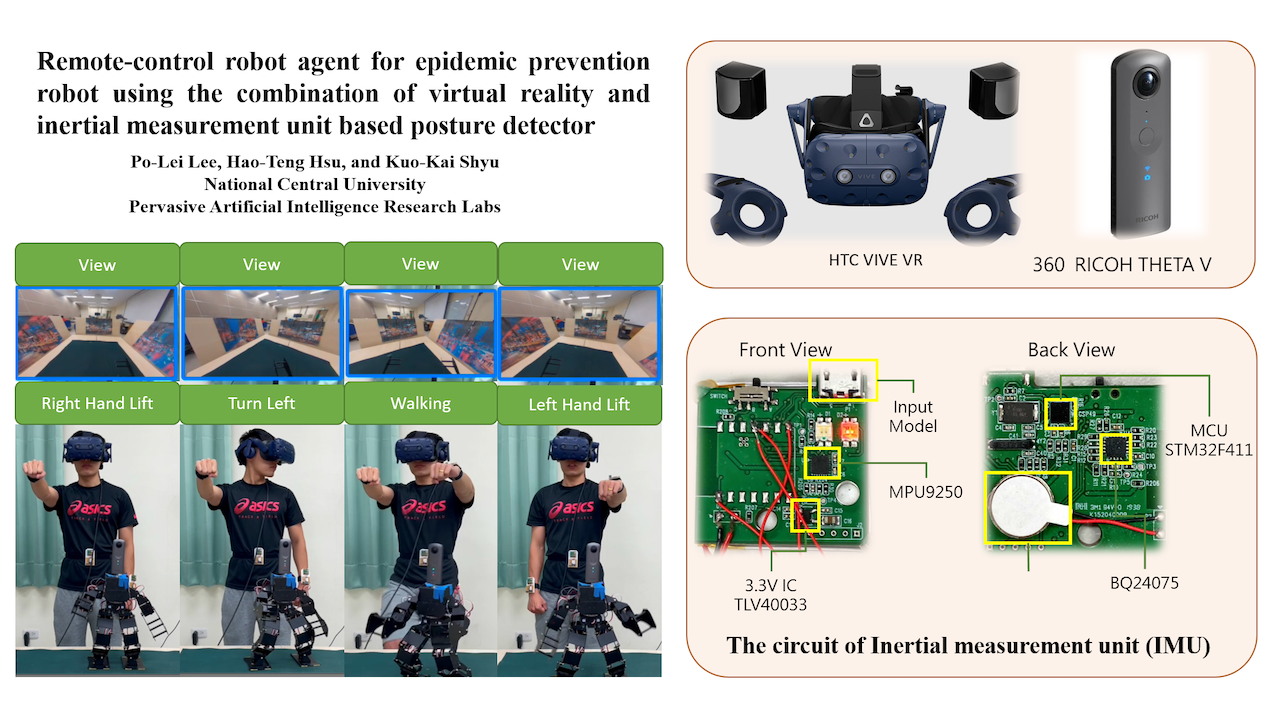
Remote-control robot agent for epidemic prevention robot using the combination of virtual reality and inertial measurement unit based posture detector
Technology maturity:Experiment stage
Exhibiting purpose:Technology transactions、Patent transactions、Product promotion、Display of scientific results
Trading preferences:Technical license/cooperation、Negotiate by self
Coming soon!
