

Highly Efficient Fabrication and Applications of Bioinspired Flexible Photonic Crystals by Trapping of Structural Coloration

Rapid fabrication of network-structured amphiphilic block copolymer photonic crystal films could be accomplished by the facile spin-casting process. By immersing into alcohols, the swollen network could give rise to the visible structural coloration. Unlike the disappearance of the visible reflection in the lamellar film, the network structure could trap the visible structural coloration by vitrification of the network after drying, namely, trapping of structural coloration (TOSC). With further control of diffusive distance and diffusivity, full-visible-wavelength structural colorations are obtained. This TOSC is reversible and responsive with heat. By TOSC, we firstly fabricate the flexible copolymer photonic crystal featuring tunable and reversible structural colorations in solid state.Unlike extremely hard and low efficient chemical way to synthesize various samples with millions of molecular weights, we developed a unique technique—trapping of structural coloration (TOSC)—through which a single-molecular-weight copolymer sample could make full-visible-wavelength gyroid photonic crystal films in solid-state within 10 minutes through a simple process of immersion into ethanol and control of film thickness. After 2002, this is the first investigation to overcome the limitation of molecular weight and may largely accelerate the mass production of the visible photonic crystals for applications.By trapping of structural coloration (TOSC), the visible photonic crystal films could be utilized in reflected-mode photonic crystal displays without the need of backlight. Owing to flexibility, lightweight and low cost, various optical devices for communication applications can be fabricated. Because of reversibility, the TOSC-featured photonic crystal films be made as stimuli-sensitive detectors of social security for volatile-organic compounds and alcohol-detectable stickers. Showing aesthetical artworks with shining colorations only observed in natural creatures, these portable detectors could be applied in anti-counterfeiting field, energy-saving paint and cultural and creative industries.
NSRRC, the biggest large-scale shared research facility in Taiwan, currently operates two accelerators, the Taiwan Light Source (TLS) and the Taiwan Photon Source (TPS). TLS, of beam energy 1.5 GeV and circumference 120 meters, is the first third-generation synchrotron light source facility in Asia and the third globally. It has opened to users since October, 1993. The best optimized energy range of synchrotron light from TLS is between vacuum ultraviolet light and soft X-rays. The TPS, of circumference 518.4 meters, is one of the brightest synchrotron light sources in the world. It began its operation in September, 2016. To meet the demands from modern technologies and pioneer sciences for higher-brightness light beams, such as biomedicine and nanoscience, it is equipped with a low-emittance synchrotron storage ring and booster synchrotron producing a beam of energy 3 GeV. It generates X-rays in the higher energy range from soft X-rays to hard X-rays, and has a capacity of more than 40 beamlines. In addition, NSRRC built and operates two hard X-ray Taiwanese beamlines at SPring-8, Japan, as well as a cold neutron triple-axis spectrometer at the Australian Nuclear Science and Technology Organisation (ANSTO), under the international collaboration agreements. Scientists from around the world can access NSRRC’s facilities to explore the properties of materials in a wide range of disciplines through a competitive proposal process. Every year, over 2,000 users use NSRRC’s experimental facilities, which not only enable basic research, but also facilitate high-tech innovation. NSRRC possesses one of the most advanced synchrotron facilities in the world and its pioneering capabilities keep Taiwan at the forefront of scientific research.
Name:莊偉綜
Phone:03-5780281#7207
Address:101 Hsin-Ann Road, Hsinchu Science Park, Hsinchu 30076, Taiwan
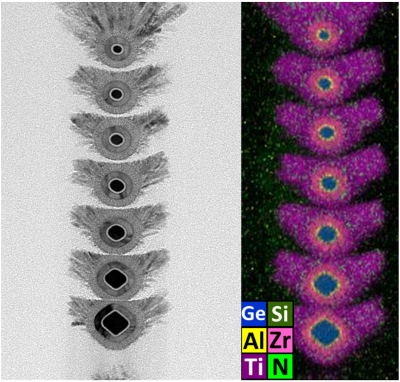
High mobility materials, process, stacked channels, and thermal circuit simulation; Ferroelectric X:HfO2 for Negative Capacitance and POC(Proof-of-Concept) Applications; Atomic layer technologies for
Fast Cancer Screening and Prognosis Assessment and Prediction of Treatment Response in Chronic Kidney Disease by Using Synchrotron Infrared Microscopy
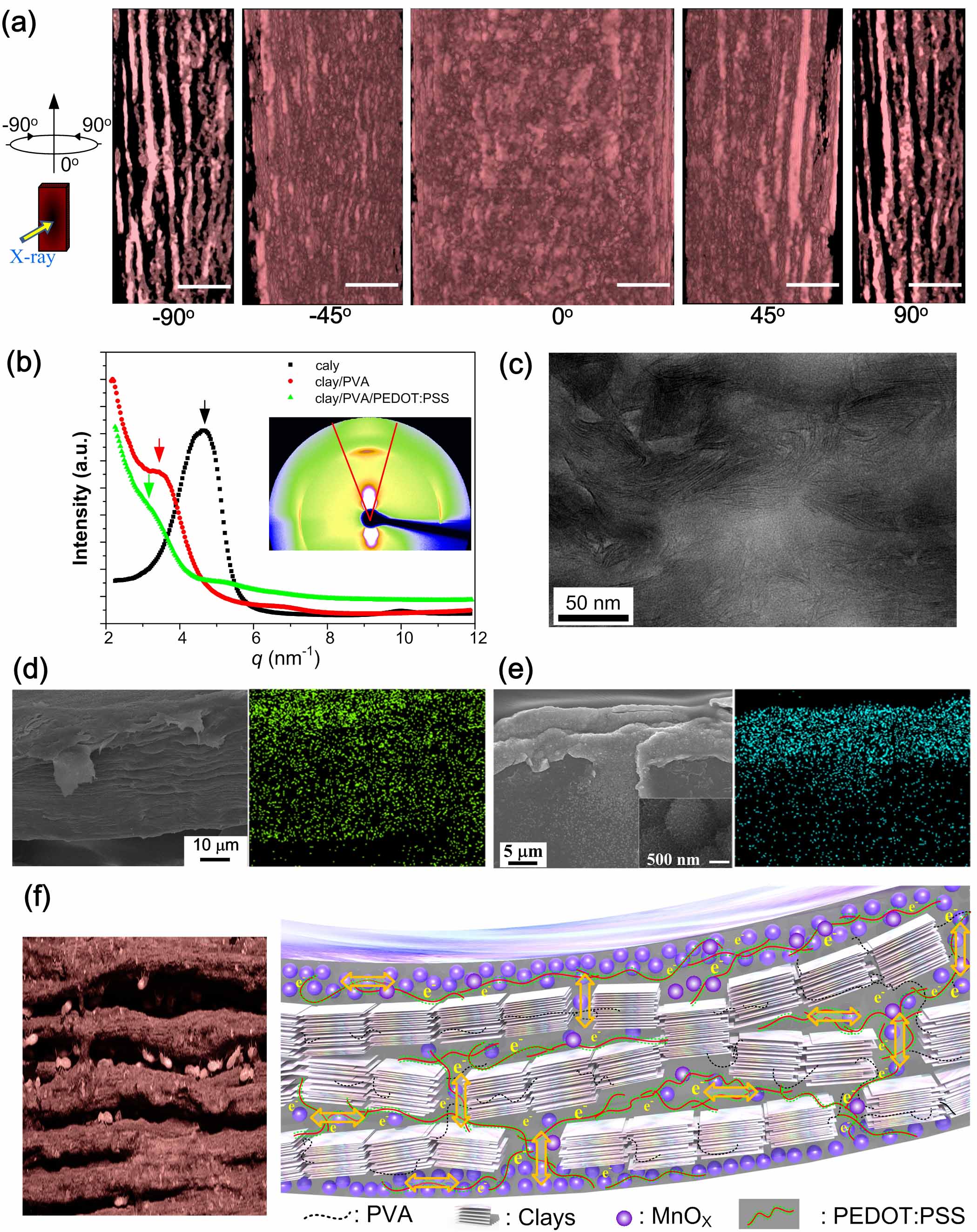
Next-generation energy for wearable device: bioinspired, eco-friendly, and felxible all-solid-state supercapacitors
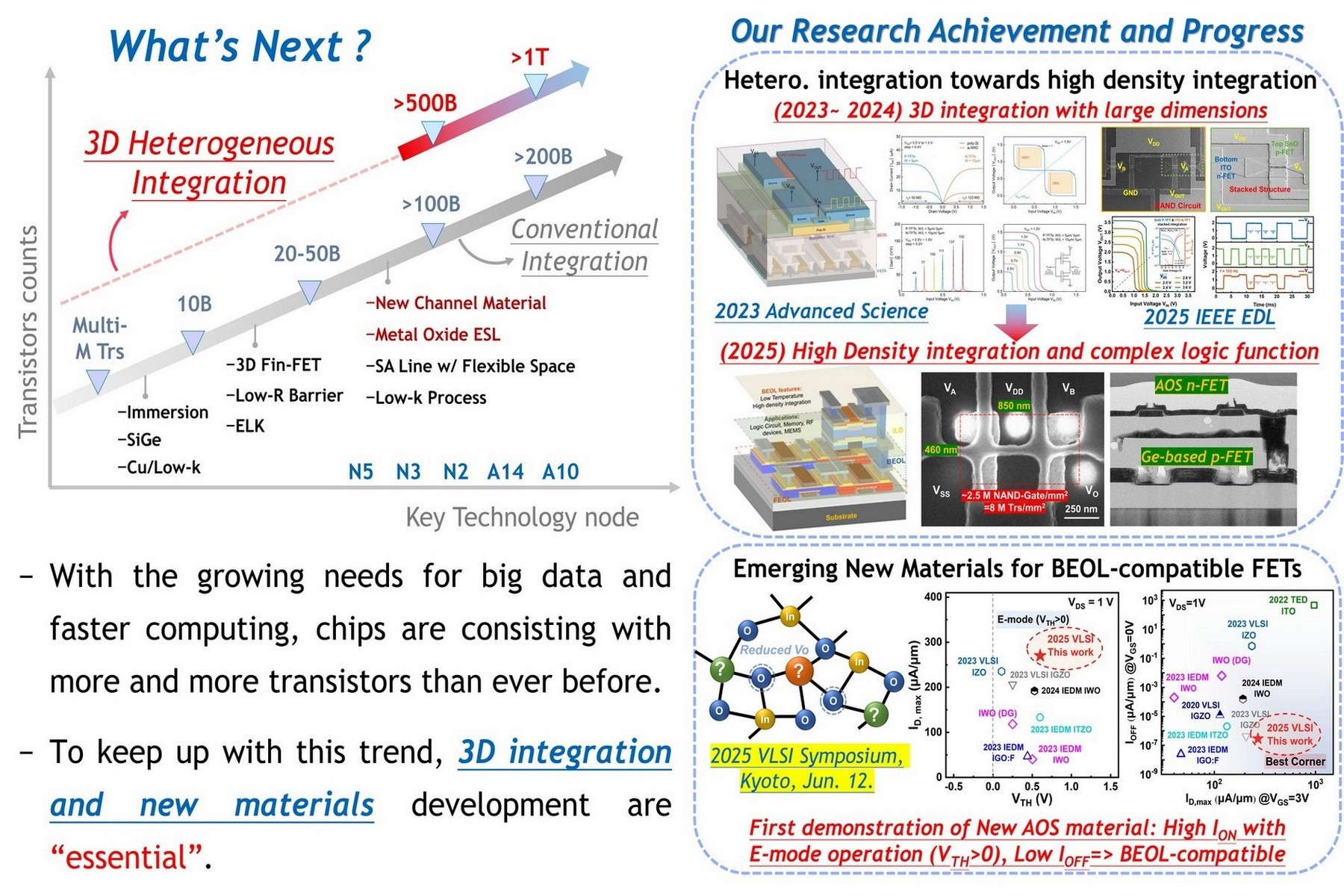
Monolithic 3D Heterogeneous Device Integration and Innovative Materials for Breaking Logic Density Limits: A Key Technology Platform for High-Density AI Computing Chips
Technology maturity:Experiment stage
Exhibiting purpose:Technology transactions、Patent transactions、Product promotion、Display of scientific results
Trading preferences:Exclusive license/assignment、Technical license/cooperation、Negotiate by self
*Organization
*Name
*Phone
*Main Purpose
*Discuss Further
*Job Category
*Overall Rating
*Favorite Area
*Key Tech Focus
*Willing to Receive Updates?
Other Suggestions
Coming soon!
