


Technology Introduction:
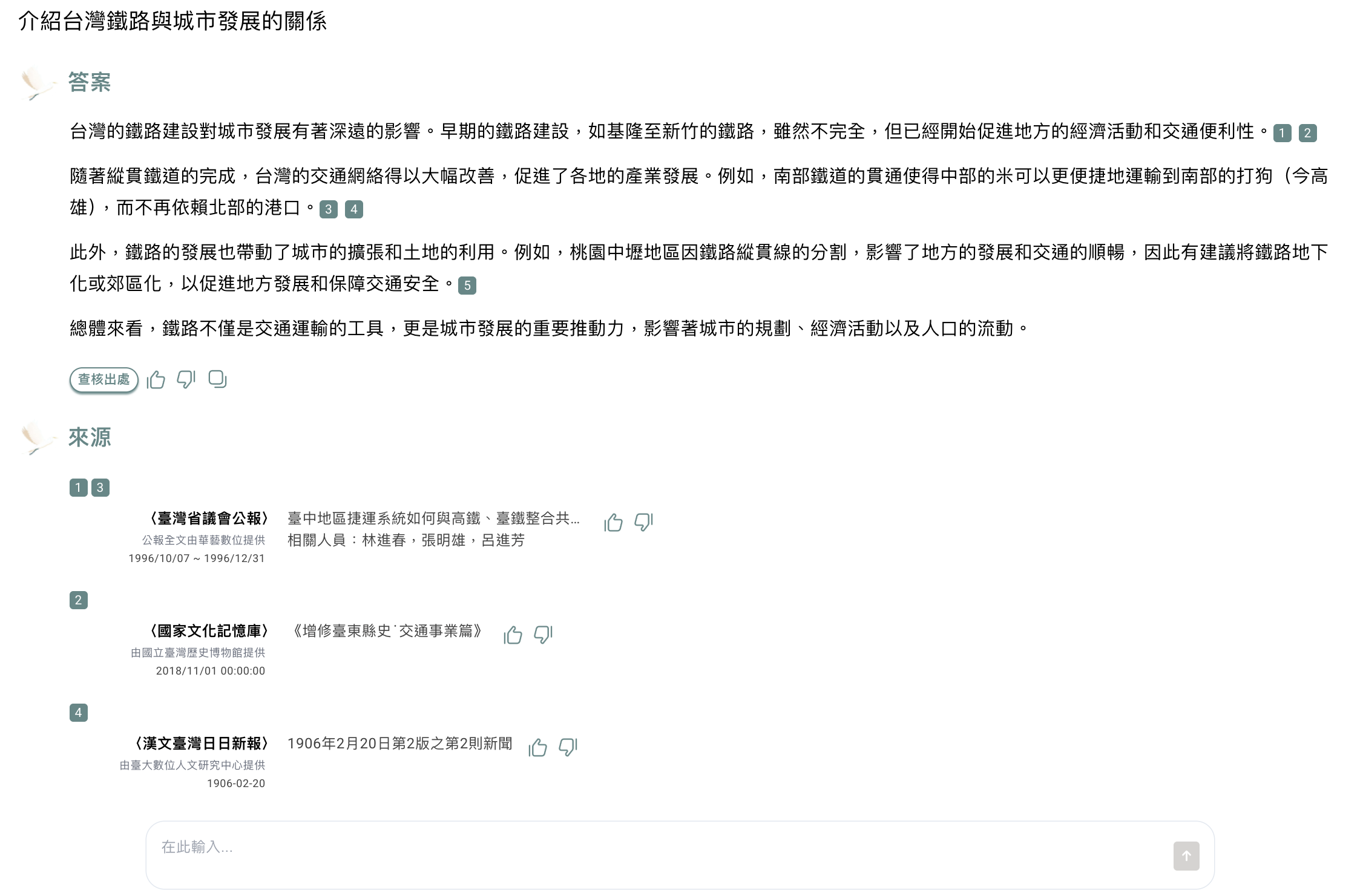
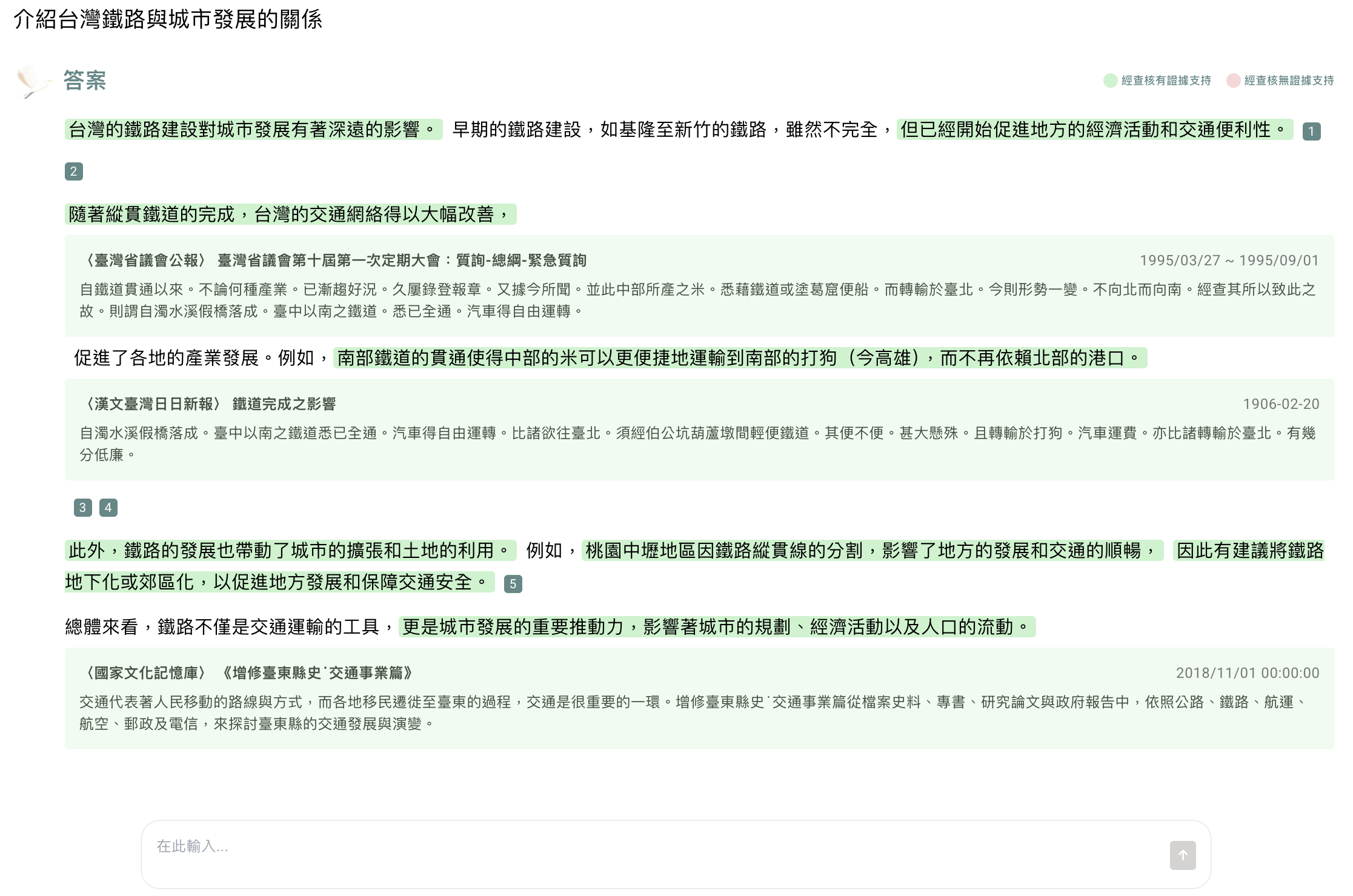
TAIHU is a dialogue-based knowledge exploration system designed for humanities research in Taiwan. It integrates multiple unique full-text primary databases. By adopting Retrieval-Augmented Generation (RAG), the system leverages designated sources to reduce the risk of AI hallucinations. It also incorporates fact-checking and source attribution to enhance accuracy and transparency. In addition, the team has developed an AI benchmarking framework and introduced user research processes to advance the system. These efforts give TAIHU strong potential for both academic and societal applications.
Industry Applicability:
TAIHU can be widely applied in humanities research, educational settings, and a variety of cultural and performing arts institutions. It supports natural language queries, multi-turn dialogues, and source verification functions. These features enhance research efficiency and the learning experience. It can also serve as an intelligent guide and knowledge-sharing tool, strengthening audience engagement. The system is designed with modular scalability and can be customized to meet institutional needs, supporting the digital transformation of humanities knowledge services.
At present, the University consists of 16 colleges, 58 departments, 146 graduate institutes, as well as 34 Master's and PhD degree programs. NTU's programs cover a wide array of disciplines across science, arts, and the humanities, with up to 8,000 courses made available for selection each semester.
Name:
Phone:02-3366-3366 #63955
Address:No. 1, Sec. 4, Roosevelt Rd., Taipei 10617, Taiwan (R.O.C.)
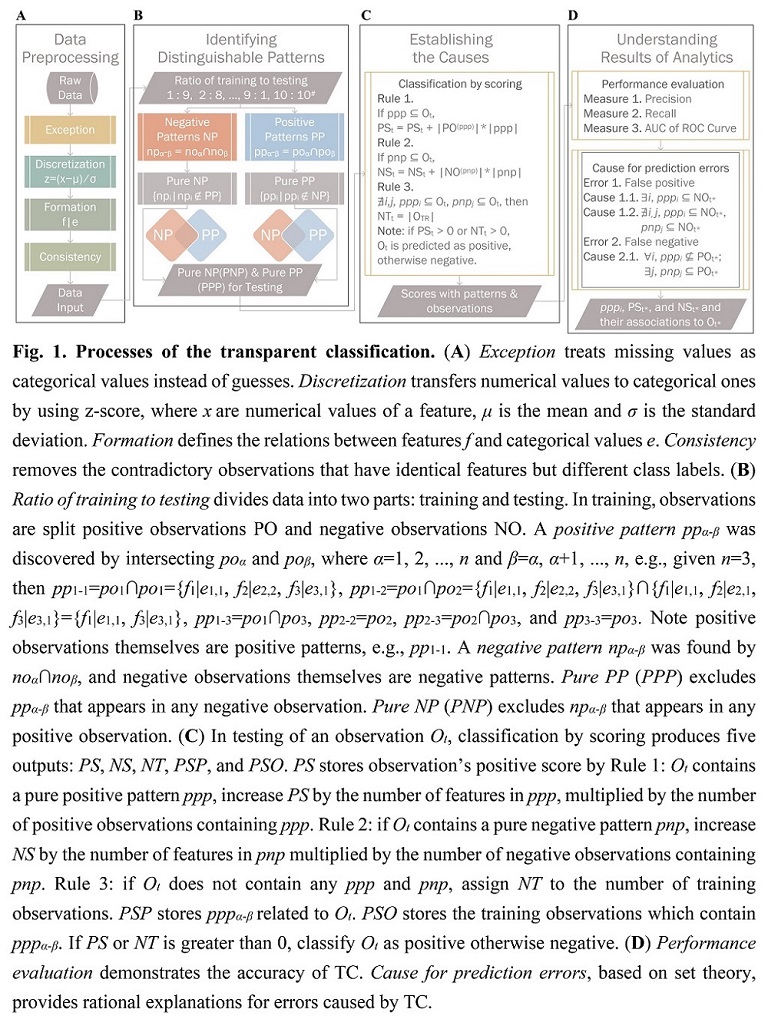
Is Ground Truth Always Correct? An Explainable Analytics Ecosystem: Understanding Misjudgments for Enhancing Decision-makings in Medicine and Recommender Systems
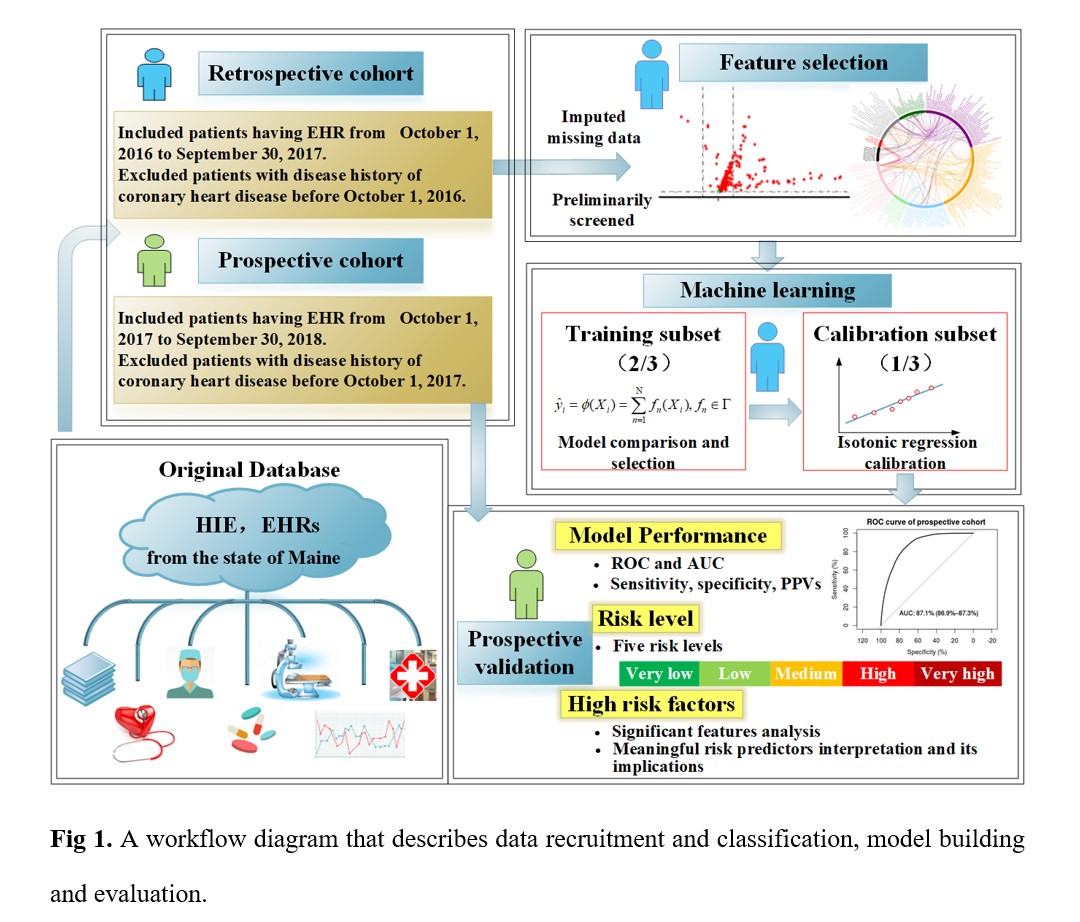
Integrated Multiple Machine Learning and Deep Learning Algorithms to Construct Prediction Model of Incident Cardiac Dysrhythmia and Coronary Heart Disease
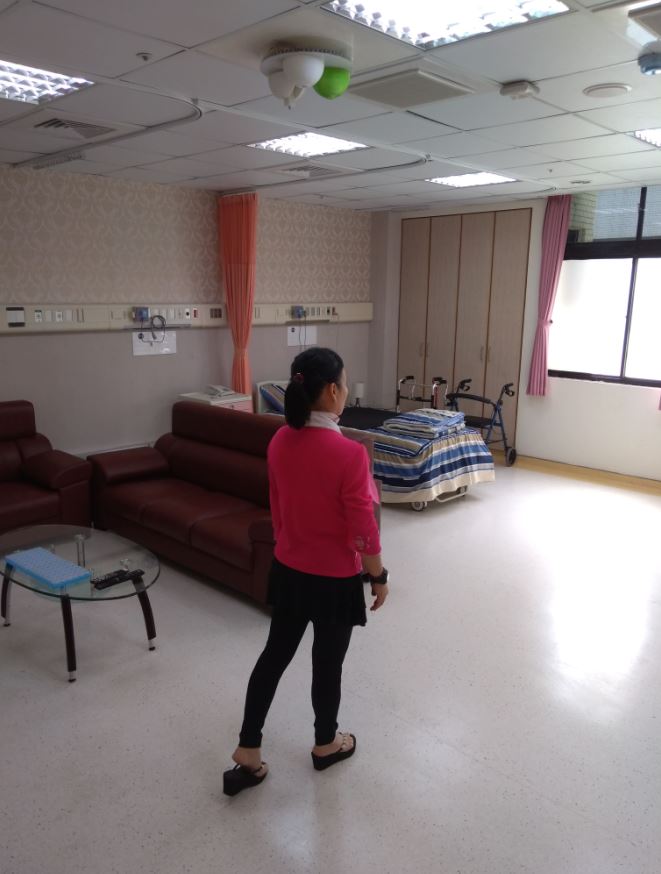
Development of AI assisted assessment and intervention system based on the culture contextualization for care of people with neurocognitive disoder.
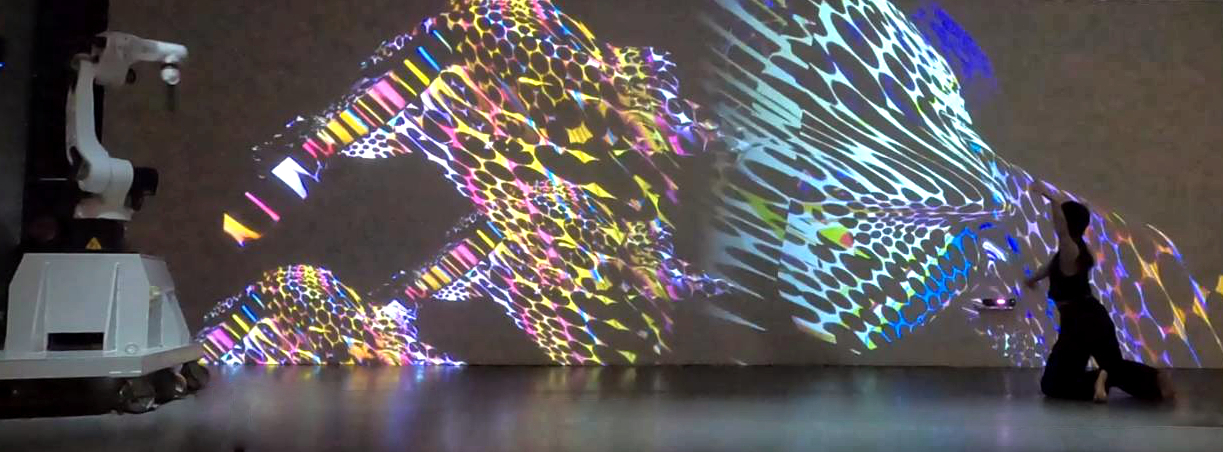
Human-Robot Co-Dancing: A Computer Vision-Based, No-Code, Intuitive Robot Arm Choreography Interface and Human-Robot Collaborative Creation System
Technology maturity:Others
Exhibiting purpose:Display of scientific results
Trading preferences:Negotiate by self
*Organization
*Name
*Phone
*Main Purpose
*Discuss Further
*Job Category
*Overall Rating
*Favorite Area
*Key Tech Focus
*Willing to Receive Updates?
Other Suggestions
Coming soon!