

Medical Education Metaverse: AI-Enhanced Virtual-Physical Integrated Healthcare Training Ecosystem
Technology Introduction:
AI-Powered Medical Education Platform: A Technical Overview
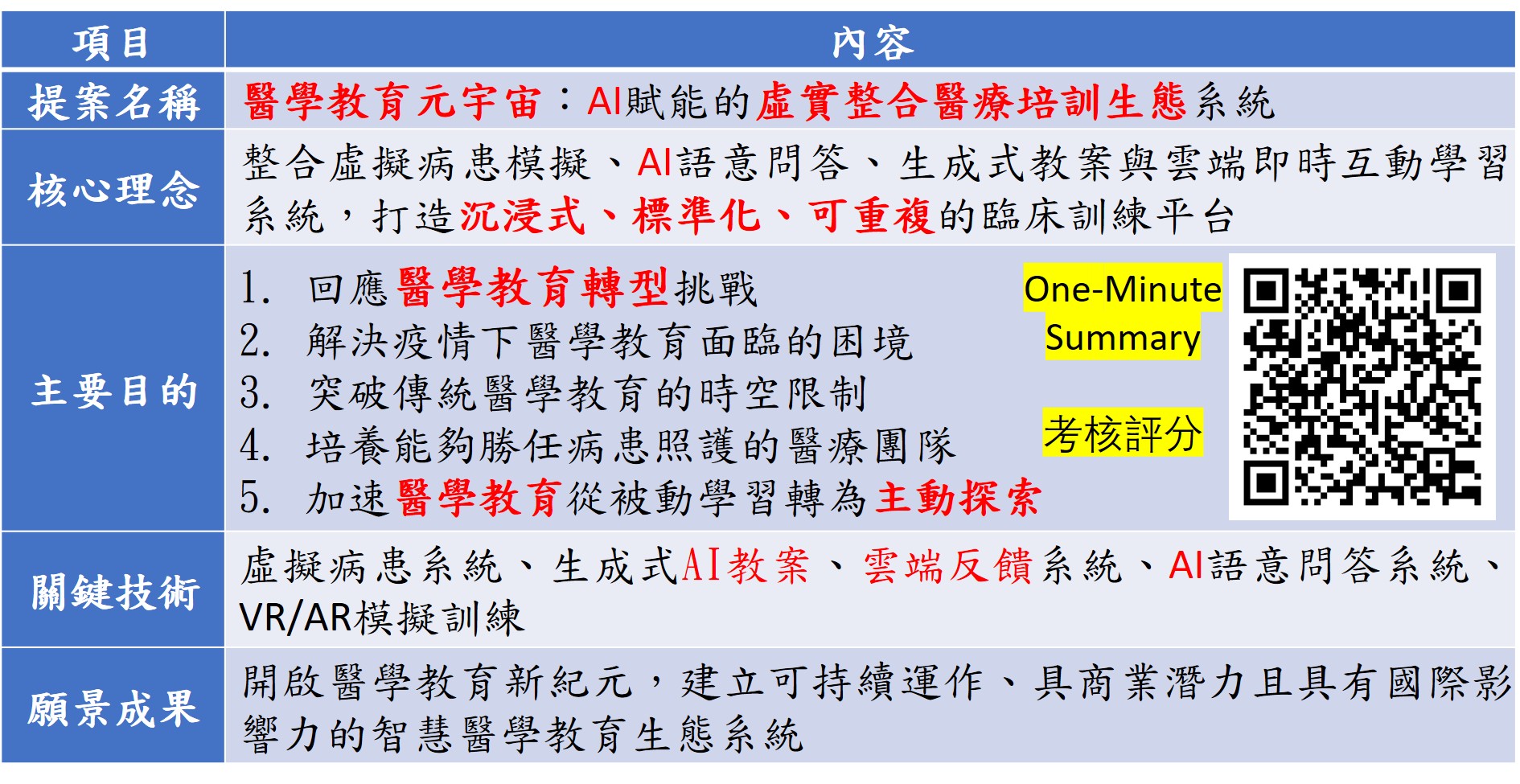
The AI-driven medical education platform, developed in collaboration with Tri-Service General Hospital, represents a significant leap forward in medical training. Its core strength lies in the synergistic integration of five key AI technologies, creating a unified and highly effective learning environment.
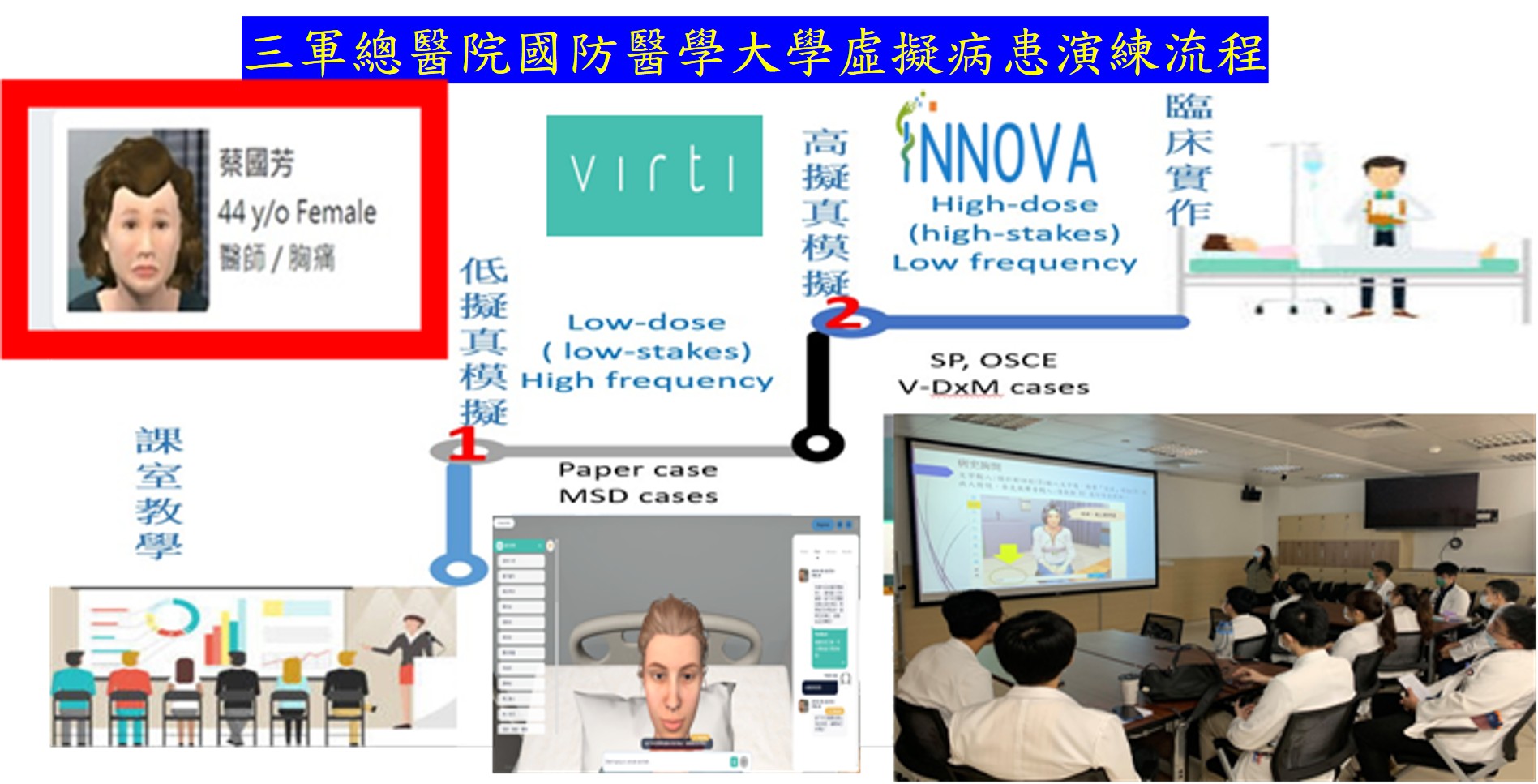
1.Natural Language Processing (NLP) & Generative AI:** The platform's most notable feature is its **virtual patient simulation**, powered by advanced NLP and generative AI. This system allows students to engage in natural, unscripted conversations with a virtual patient. The NLP component accurately interprets a student's open-ended questions and commands, while the generative AI engine provides dynamic, medically accurate responses. This technical pairing moves beyond traditional, static decision-trees, creating a truly immersive and realistic diagnostic experience.
2.Semantic Question-Answering (QA) & Clinical Predictive Models:** The platform's real-time feedback system is built on a sophisticated combination of semantic QA and clinical predictive models. The semantic QA engine processes the student's entire interaction history—from their initial questions to their diagnostic and treatment decisions—to understand the underlying clinical reasoning. Simultaneously, the clinical predictive models analyze this data against vast databases of medical knowledge and best practices. This allows the system to not only identify a student's errors but also to predict potential negative outcomes based on their choices, providing immediate, precise, and personalized feedback that is crucial for building clinical acumen.
3.Learning Analytics & Data-Driven Insights:** Every interaction within the platform is captured and analyzed. The **learning analytics** engine tracks a student's progress, identifies areas of weakness, and quantifies their decision-making effectiveness.
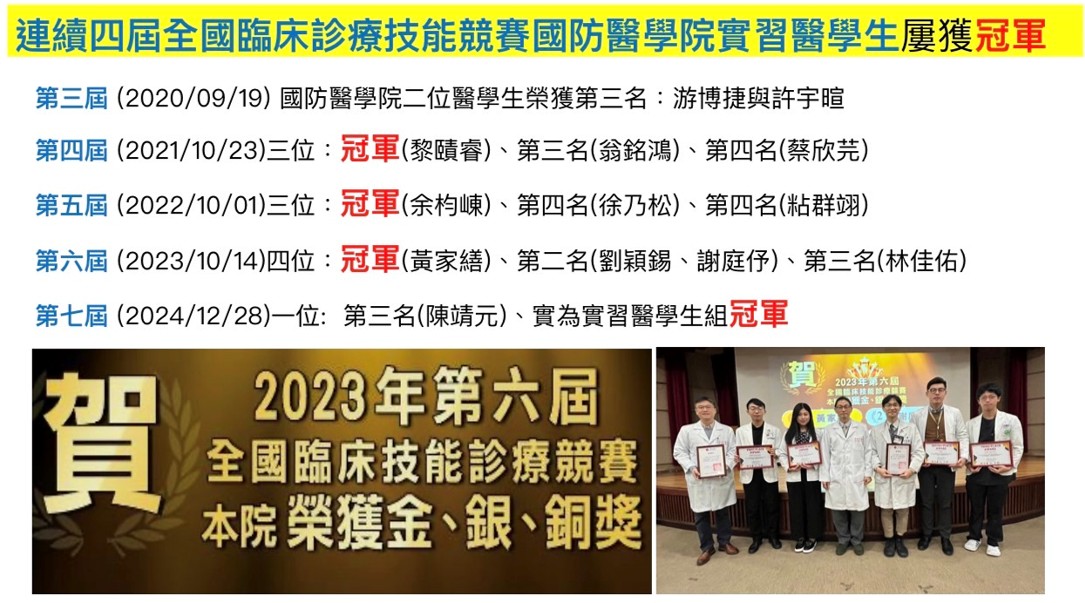
Tri-Service General Hospital: Established in 1946 as the 801 Army General Hospital, Tri-Service General Hospital (TSGH) has undergone several name changes, including Taiwan Army Hospital, Fifth Logistics General Hospital, and First Army, Navy, and Air Force General Hospital. In July 1967, it was reorganized and renamed as Tri-Service General Hospital. In 1979, TSGH became the affiliated teaching hospital of the National Defense Medical Center (NDMC). Currently, TSGH is the only medical center-level military hospital in Taiwan, providing medical services to military personnel, their families, and the general public, while also engaging in medical research and education. National Defense Medical University: The National Defense Medical University (NDMU) is the military medical university of Taiwan’s armed forces, under the jurisdiction of the Ministry of National Defense Medical Bureau. Located in Neihu, Taipei, it forms the National Defense Medical Center together with its affiliated teaching hospital, Tri-Service General Hospital, and other military medical institutions. NDMU is a key contributor to medical, food, and pharmaceutical research in Taiwan, and has assisted in establishing numerous medical and educational institutions, including veterans’ hospitals, military hospitals, National Yang-Ming Medical College (now National Yang Ming Chiao Tung University Taipei Yang-Ming Campus), National Taiwan University’s School of Nursing, NTU Hospital Department of Anesthesiology, and Jingde Pharmaceutical Factory.
Name:
Phone:0938-158-187
Address:No. 325, Section 2, Chenggong Road, Neihu District, Taipei City, Taiwan、No. 161, Section 6, Minquan East Road, Neihu District, Taipei City, Taiwan
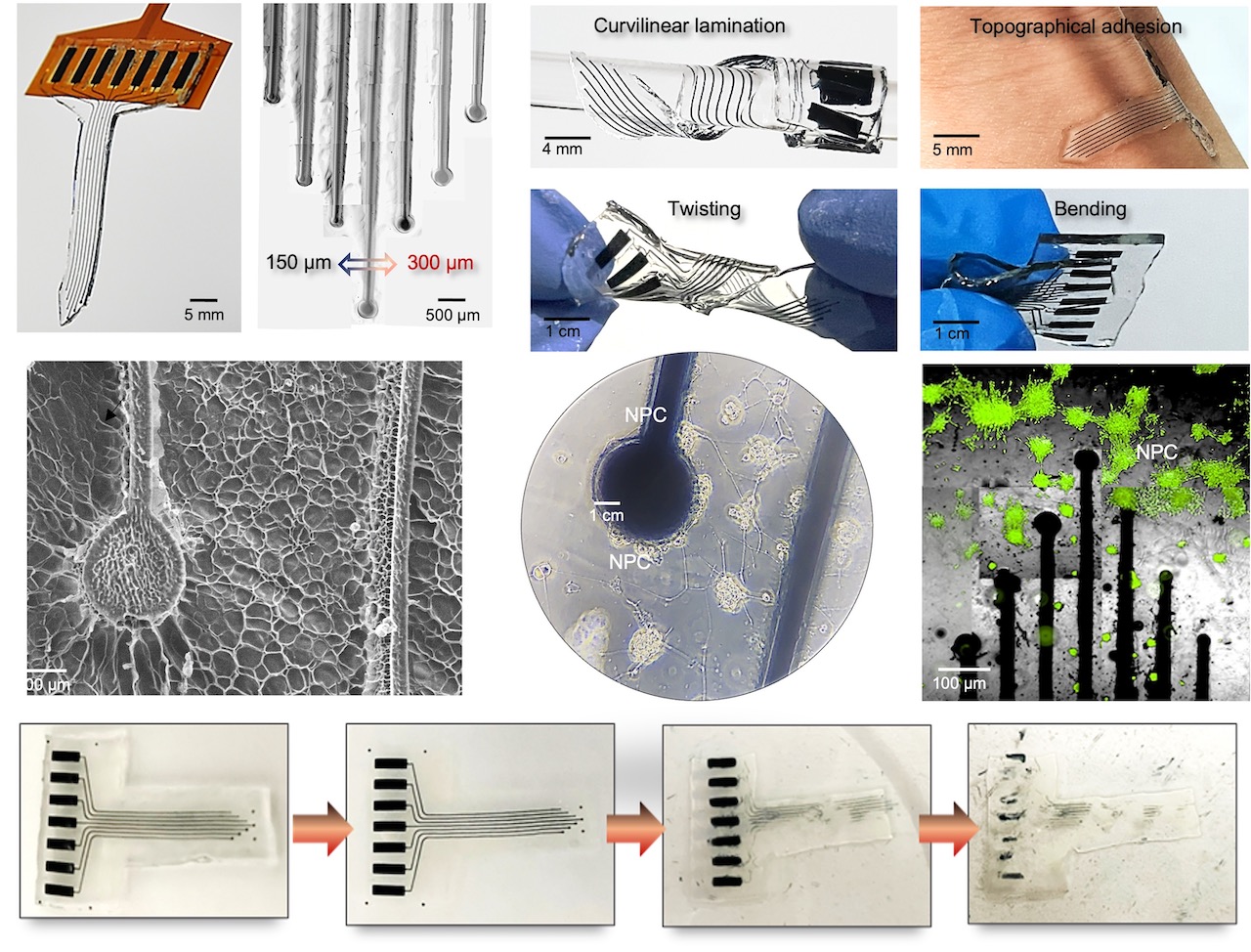
Degradable Implantable Flexible Microelectrode Patch with High-Resolution Electrical Stimulation, Electrophysiological Signal Sensing, and Cellular Regenerative Therapy
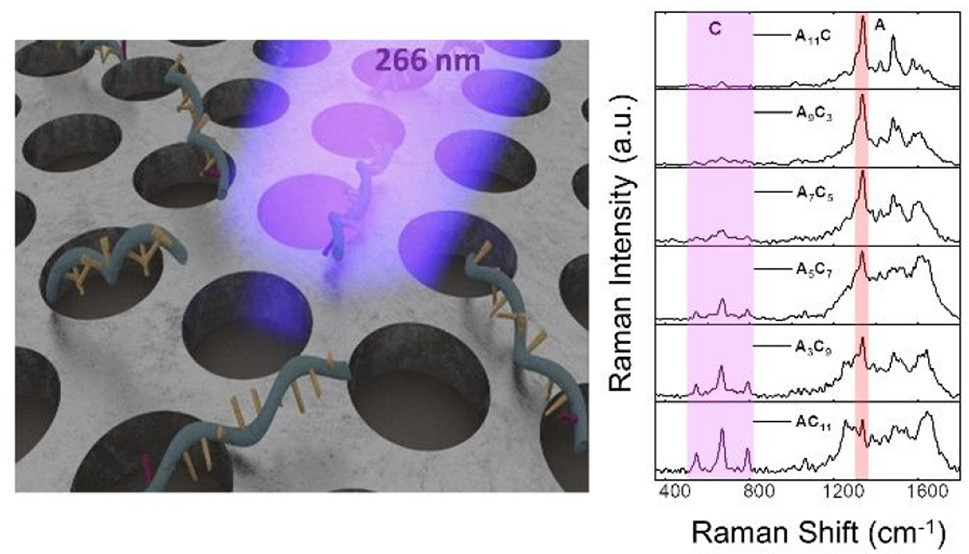
Demonstration of a Superior Deep-UV Surface-Enhanced Resonance Ram an Scattering (SERRS) Substrate and Single-Base Mutation Detection in O ligonucleotides
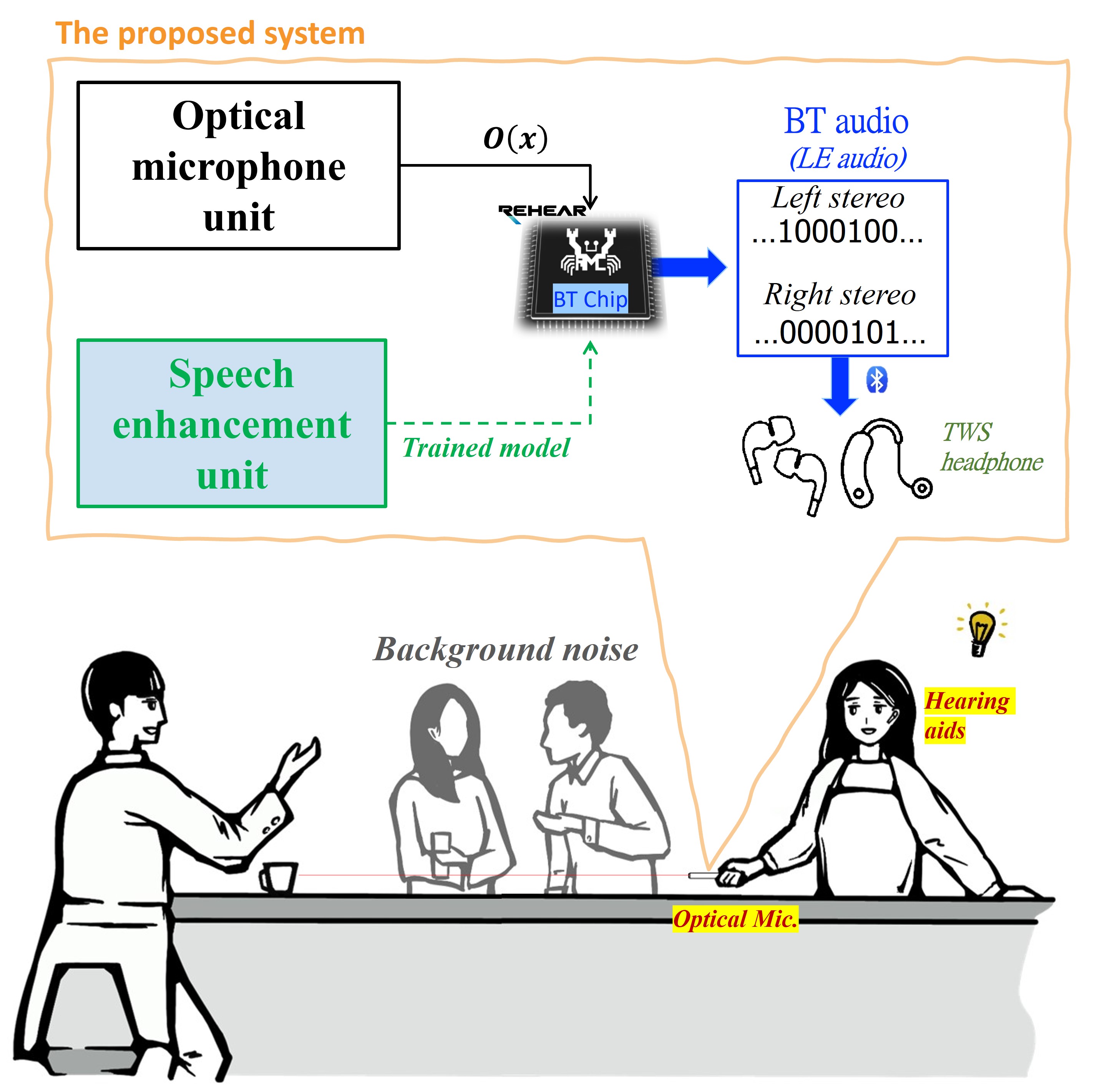
Hearing through Light: Enhancing Listening Benefits of Hearing Assistive Devices with Optical Microphones and Deep Learning Technology
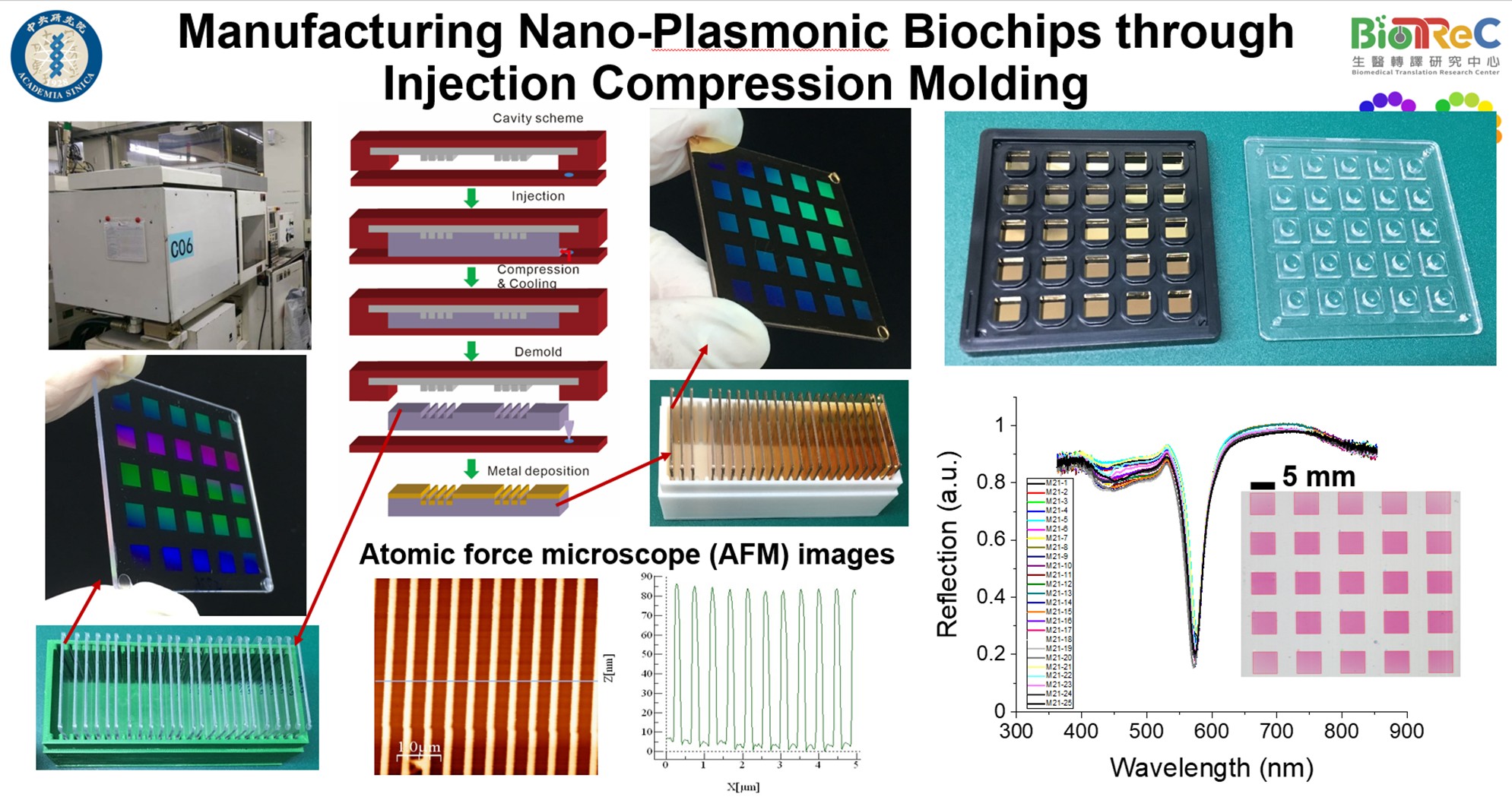
Quantitative Analysis of Drug Toxicity Using Metallic Nanostructures and Contrast-Enhanced Surface Plasmon Imaging Technology
Technology maturity:Prototype
Exhibiting purpose:Display of scientific results
Trading preferences:Technical license/cooperation
*Organization
*Name
*Phone
*Main Purpose
*Discuss Further
*Job Category
*Overall Rating
*Favorite Area
*Key Tech Focus
*Willing to Receive Updates?
Other Suggestions
Coming soon!